
TL;DR: Mold can begin growing within 24 to 48 hours after water damage, as long as a surface stays wet and the temperature is above roughly 60°F. Drywall paper, carpet padding, and wood framing are the fastest to colonize. Utah’s dry outdoor air does not change this, because once water gets inside a wall cavity or under flooring, it creates its own humid microclimate regardless of what the weather is doing outside.
If a supply line failed under the sink in your Provo home two days ago, or a window leaked during an October storm near the Provo River Trail, the clock on mold growth already started the moment that water hit the drywall. A lot of homeowners in the Edgemont or East Bay neighborhoods assume Utah’s low humidity buys them extra time. It doesn’t. Wet building material behaves the same way in American Fork or Spanish Fork as it does in Seattle, because the moisture that matters is trapped inside the wall, not floating around outside.
How Soon Does Mold Grow After Water Damage?
Mold spores that are already present in nearly every home can begin colonizing wet organic material within 24 to 48 hours of exposure, according to guidance from the EPA. Visible growth, the fuzzy or discolored patches people recognize, typically shows up within 3 to 12 days depending on the material and how wet it stayed.
The fastest-colonizing materials are the ones in nearly every water-damage job: drywall paper facing, carpet and carpet pad, wood subfloor, and the paper backing on insulation. Nonporous materials like tile, metal, and sealed concrete resist growth much longer because spores can’t root into the surface the same way.
This is why the restoration industry treats the first 24 to 48 hours as the drying window, not a buffer. The IICRC S500 water damage standard sets the benchmark that structures should reach dry standard within about 72 hours using commercial air movers and dehumidification, specifically to stay ahead of that mold timeline.
Does Utah’s Dry Climate Make My Home Immune to Mold?
No. A dry outdoor climate does not protect a wall cavity, subfloor, or crawlspace once water gets trapped inside it. Mold only cares about the moisture level right at the material’s surface, not the regional humidity reading.
Wasatch Front homes see ambient relative humidity in the 20 to 40 percent range for much of the year, and that does slow surface mold on things left out in the open, like a damp towel on a counter. But water damage rarely stays on the surface. It wicks up drywall, soaks into baseboards, and pools under vinyl plank flooring where there’s no airflow at all. Inside that cavity, the local humidity can sit above 90 percent for days, which is a perfect growth environment no matter what the forecast says for Provo.
The Utah Department of Health tracks mold-related indoor air concerns through its Environmental Public Health Tracking program, and the pattern holds statewide: indoor water intrusion, not outdoor climate, is the driver.
What Are the Signs Mold Is Already Growing?
The earliest sign is usually smell, not sight. A musty, earthy odor in a room that had any water event in the last two weeks means mold is likely already active somewhere you can’t see it yet.
Other early indicators include:
- Discoloration on drywall or baseboards that wasn’t there before, often gray, green, or black and slightly fuzzy at the edges
- A baseboard or drywall section that feels soft, swollen, or warps away from the wall
- Condensation returning to a window or wall even after the room has dried
- Allergy-like symptoms that show up specifically in one room and ease when you leave it
If you’re seeing any of these, our guide to hidden mold signs breaks down where to look behind walls, under cabinets, and around HVAC returns where growth hides longest.
Does Drying a Room Fast Actually Prevent Mold?
Yes, fast and thorough drying is the single most effective way to prevent mold after water damage, but it has to happen within that first 24 to 48 hour window and it has to reach materials you can’t see, not just the visible surface.
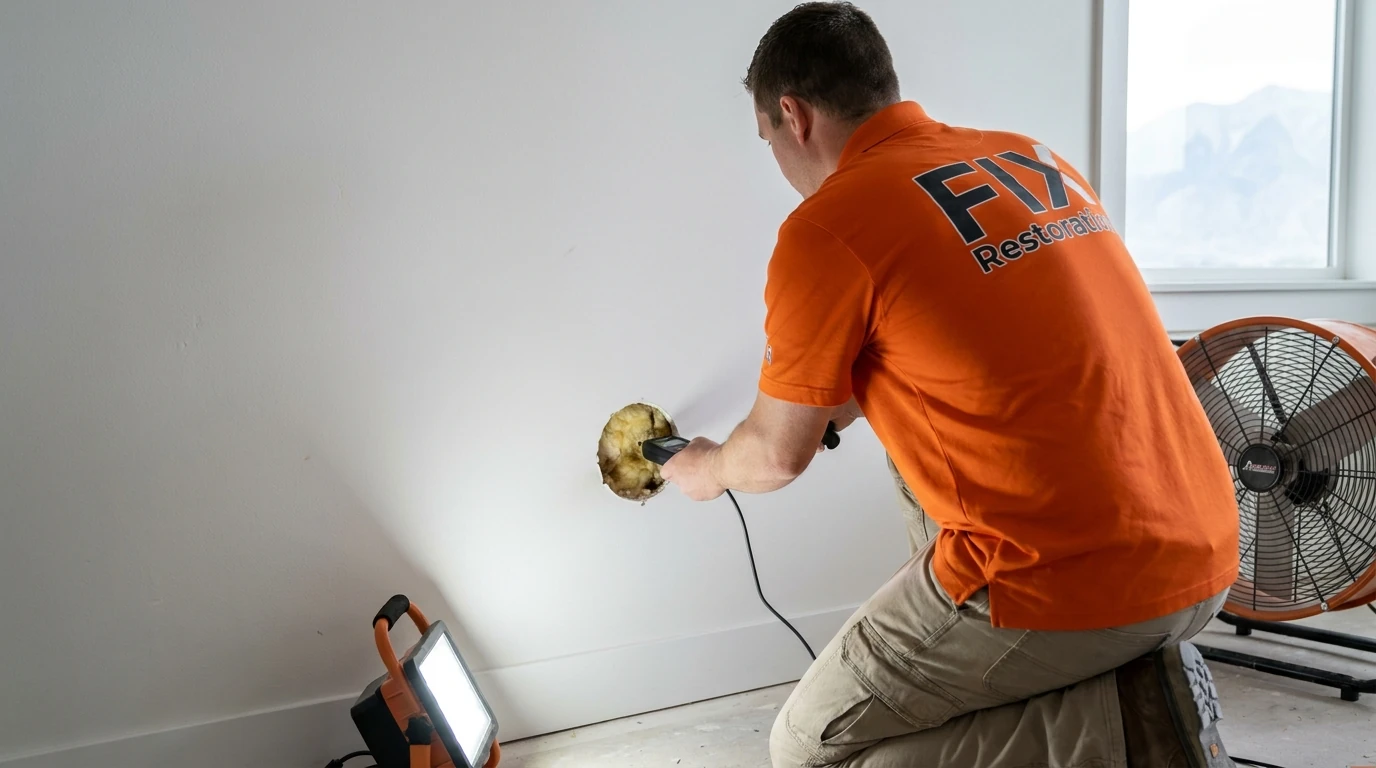
Running a box fan and opening a window helps surface moisture evaporate, but it does almost nothing for water that has already migrated inside a wall cavity or under flooring. Professional drying uses moisture meters to confirm materials are actually dry, not just dry to the touch, combined with commercial air movers and low-grain-refrigerant dehumidifiers that pull ambient humidity down faster than any household fan can. That combination is what gets a structure to dry standard before the 72-hour mark the IICRC S500 standard is built around.
If the water event involved more than a small spill, for example a burst pipe or a supply line failure that ran for hours, assume materials inside walls and under flooring are wet even if the carpet feels dry by evening.
When Should I Call a Mold Remediation Company in Provo?
Call a mold remediation company as soon as you see visible growth, smell a persistent musty odor, or know a water event went more than 48 hours without professional drying. Waiting past that point usually means the mold has moved from a surface-cleaning job to a containment and removal job.
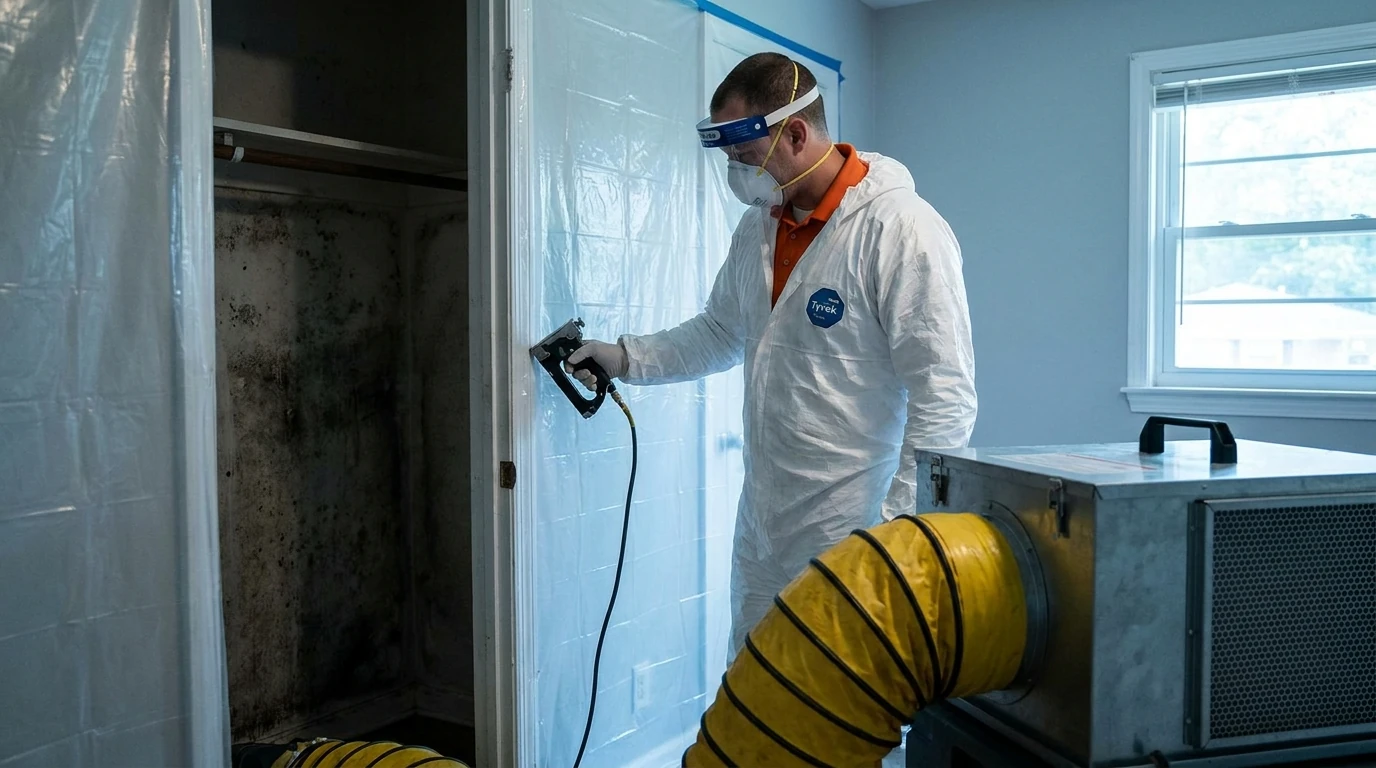
If you’re still inside that first 24 to 48 hour window after a leak, the priority is getting the structure dried, not treated for mold yet. FIX Restoration handles both sides of that timeline for homes across Provo, Orem, and American Fork: emergency drying when you call fast enough to get ahead of growth, and full containment-based remediation using poly sheeting and HEPA filtration when mold has already established. If you’re in Provo and not sure which stage you’re in, a moisture assessment is the fastest way to find out before deciding on either path.
For homes already past the drying window, our Provo water damage page covers what a delayed response typically turns into and what the remediation side of the job looks like.
A damp room doesn’t have to turn into a mold job if it’s caught inside that first window. Request a moisture assessment before guessing at whether a wall is actually dry, and keep the written drying documentation for your insurance file either way.
About FIX Restoration
This post was written with the FIX Restoration team. The company is licensed and insured, founded in 2012, and serves American Fork, Provo, Orem, Lehi, and surrounding Utah County communities with water damage restoration and mold remediation. Crews are available 24/7 for drying response, since the first 24 to 48 hours after a leak is the window that determines whether mold becomes part of the job.
Need help now? Call FIX Restoration at (801) 930-9750.