
Renovations, Remodels and General Contracting in American Fork
Renovations, remodels and general contracting in American Fork and surrounding areas. Insurance billing accepted. Call (801) 930-9750.
A restoration job ends when the damaged material is gone, but that’s only half the story. What’s left is often a gutted bathroom, an exposed kitchen wall, or a subfloor stripped down to the joists. Getting a home back to livable, functional, and finished is a separate discipline from mitigation, and it’s where a lot of homeowners get stuck: managing multiple subcontractors, chasing permits, and trying to coordinate timelines while still living in the house. FIX Restoration handles the rebuild and renovation side under the same roof, so the transition from damage repair to finished space doesn’t fall through the cracks.
What Renovations, Remodels and General Contracting actually involves
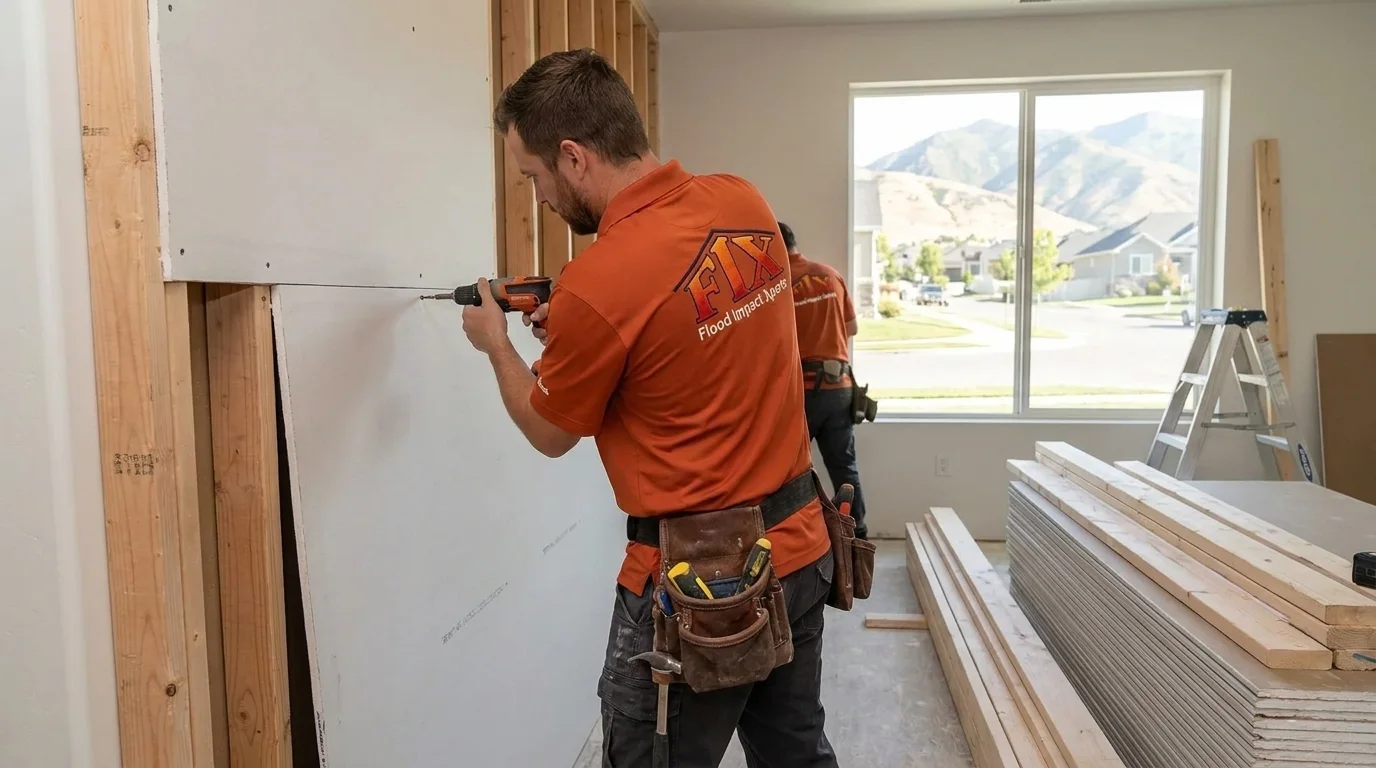
General contracting for restoration and remodeling means managing every trade, framing, drywall, tile, cabinetry, plumbing rough-in, electrical, painting, and finish carpentry, under a single scope of work and a single point of contact. On a post-damage rebuild, that scope is driven by what the insurance adjuster has documented and what the structure actually needs. On an elective remodel, it starts with what the homeowner wants and works backward through budget, permitting, and sequencing.
A kitchen remodel, for example, typically involves demo, rough-in changes (moving a drain line or adding a circuit for an island), new cabinet installation, countertop templating and fabrication, tile backsplash, and finish painting, each trade with its own lead time and inspection window. A bathroom remodel adds waterproofing behind the tile, a critical step that’s invisible once the walls are closed. Post-damage rebuilds add an insurance documentation layer: every line item needs to match the adjuster’s estimate or be supplemented with written justification before work begins.
In Utah County, most structural work and electrical or plumbing changes require a permit through the city or county building department. Permit timelines vary by municipality and scope, and inspections have to be scheduled at the right phase, you can’t close a wall before a framing inspection passes.
Our process
-
Scope development and documentation, Before any work is priced, the full scope is written out: what’s being removed, what’s being replaced, what materials are specified, and what permits are required. On insurance jobs, this scope is reconciled against the carrier’s estimate line by line.
-
Permitting and scheduling, Permit applications are submitted to the appropriate jurisdiction. Trade subcontractors are scheduled in the correct sequence, rough-in trades before insulation and drywall, finish trades after inspections clear.
-
Structural and rough-in work, Framing repairs, subfloor replacement, and any plumbing or electrical rough-in changes happen first. These are the phases that get inspected before walls close, so accuracy here prevents costly re-opens later.
-
Finish installation, Drywall, insulation, tile, cabinetry, countertops, fixtures, paint, and trim are installed in sequence. On a bathroom remodel, waterproofing membranes are applied and inspected before tile goes down.
-
Final walkthrough and punch list, Every project closes with a documented walkthrough. Anything that doesn’t meet spec, a grout line, a cabinet alignment, a paint edge, gets corrected before the job is marked complete.
What separates a good renovation response from a bad one
The most common failure point in post-damage renovation is a scope that doesn’t match the actual loss. An adjuster’s estimate is written from photos and a software database, it may miss concealed damage, code-required upgrades, or the fact that a discontinued tile means the whole floor needs to match. Contractors who simply build to the adjuster’s number without reviewing it often leave homeowners with an underfunded project and a gap they didn’t see coming.
On elective remodels, the equivalent failure is a vague contract. “Kitchen renovation” means nothing without specifying cabinet brand and line, countertop material and edge profile, tile size and grout color, and fixture allowances. Ambiguity in the contract is where change orders multiply.
Waterproofing is the technical detail most often skimped on in bathroom remodels. Cement board alone is not a waterproofing membrane. Behind a shower or tub surround, a properly applied membrane, sheet-applied or liquid, is what keeps water out of the framing. A bathroom remodel that skips this step will show moisture damage within a few years.
Permit avoidance is another common shortcut that creates long-term liability. Unpermitted electrical or plumbing work can complicate a home sale, void a homeowner’s insurance claim, and create safety hazards that a future inspector will flag.
What does Renovations, Remodels and General Contracting cost?
Typical costs for renovation and remodeling work vary significantly based on scope, materials, and whether the project is insurance-driven or elective. Most homeowners find that finish quality and fixture selections move the number more than square footage does. Every project is different, and FIX Restoration provides a written scope of work before any work begins, no surprises mid-project. Homeowners insurance typically covers post-damage reconstruction when the loss is a covered peril (water, fire, storm), but elective upgrades beyond like-for-like replacement are generally the homeowner’s responsibility.
| Scenario | Typical industry range |
|---|---|
| Single bathroom remodel (cosmetic) | $6,000 – $15,000 |
| Full bathroom remodel with layout changes | $15,000 – $35,000 |
| Kitchen remodel (mid-range finishes) | $25,000 – $60,000 |
| Post-damage room rebuild (single room) | $8,000 – $25,000 |
| Whole-home post-damage reconstruction | $40,000 – $150,000+ |
| Basement finish or remodel | $20,000 – $55,000 |
Seasonal and regional considerations
In Utah County, the permit and inspection pipeline tends to slow during peak construction season in late spring and summer, when municipal building departments are handling high volumes. Planning a remodel for late fall or winter often means faster permit turnaround and better subcontractor availability. For post-damage rebuilds following winter freeze events or spring snowmelt flooding, both common along the Wasatch Front, the rebuild phase typically can’t begin until mitigation drying is complete and moisture readings confirm the structure is ready to close.
Service area
FIX Restoration is based in American Fork and serves homeowners and property managers throughout Utah County and the surrounding area, including Lehi, Pleasant Grove, Orem, Provo, Lindon, Cedar Hills, Highland, and Saratoga Springs. City-specific pages for each service area are linked from the navigation.
If your home or property is ready to move from damage mitigation into the rebuild phase, or if you’re planning a kitchen remodel, bathroom remodel, or larger renovation, call FIX Restoration at (801) 930-9750 to get a written scope of work started.
Frequently Asked Questions
Does homeowners insurance cover renovation and rebuild work after a loss?
What's the difference between a remodel and a renovation, and does it affect permitting?
How do you handle the gap between what the insurance adjuster estimated and what the rebuild actually costs?
What waterproofing is required behind shower tile, and how do I know if my contractor is doing it correctly?
How long does a typical kitchen or bathroom remodel take from start to finish?
Looking for the best renovations, remodels and general contracting company in American Fork?
FIX Restoration provides renovations, remodels and general contracting in American Fork, UT and the surrounding area, and has served local property owners since 2012. Customers rate us 4.9 out of 5 stars across 558 Google reviews. We answer calls 24/7 — call (801) 930-9750 for immediate help.
Need Renovations, Remodels and General Contracting now?
We respond 24/7 across American Fork and surrounding UT cities.
Related Coverage
- Our Restoration Services
- Contact FIX Restoration
- Renovations, Remodels and General Contracting in Highland
- Renovations, Remodels and General Contracting in Lehi
- Renovations, Remodels and General Contracting in Orem
- Renovations, Remodels and General Contracting in Pleasant Grove
- Renovations, Remodels and General Contracting in Provo
- Renovations, Remodels and General Contracting in Saratoga Springs
- Renovations, Remodels and General Contracting in Spanish Fork
- Renovations, Remodels and General Contracting in Springville
- Renovations, Remodels and General Contracting in South Jordan
- Renovations, Remodels and General Contracting in Draper
- Renovations, Remodels and General Contracting in Herriman
- Renovations, Remodels and General Contracting in Riverton