
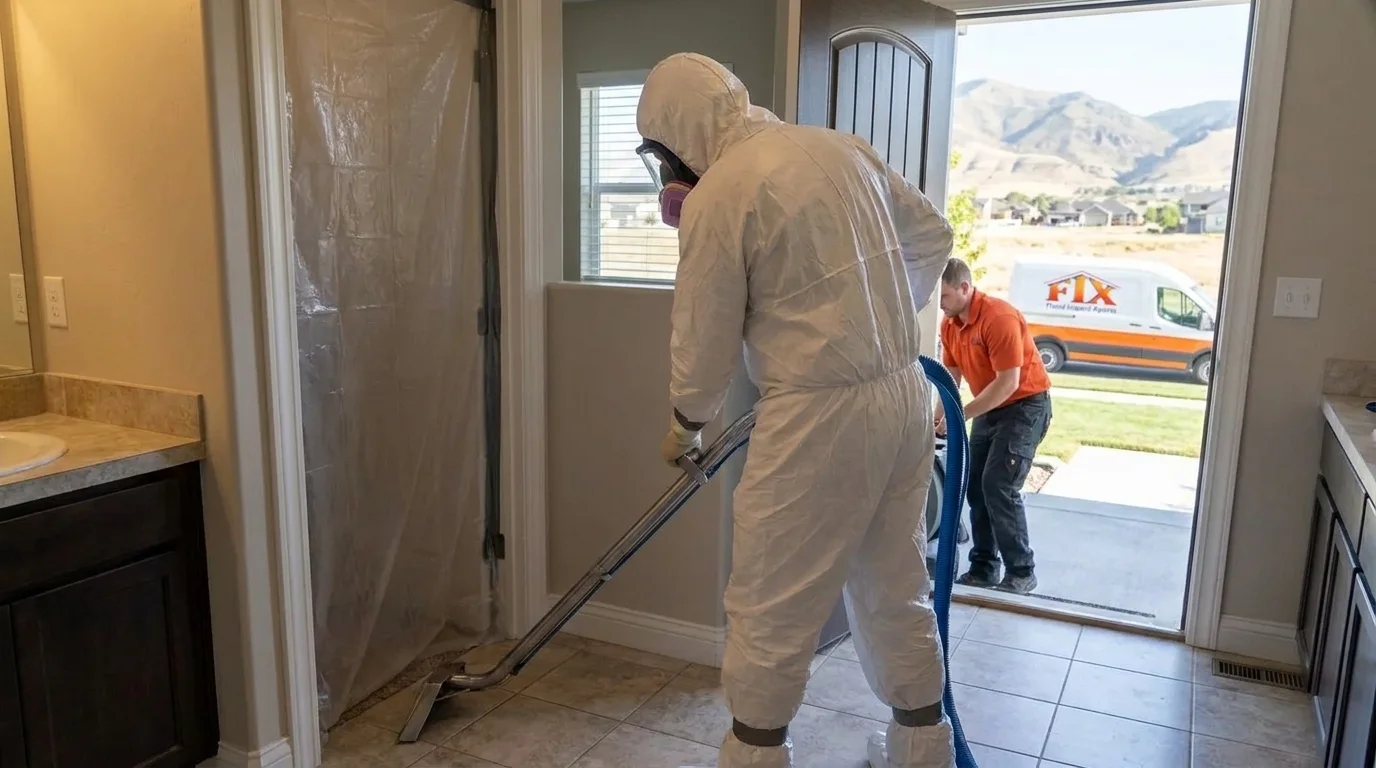
Emergency Sewage Cleanup and Sanitization in American Fork
Emergency sewage cleanup and sanitization in American Fork and surrounding areas. Insurance billing accepted. Call (801) 930-9750.
Sewage backup in American Fork? Call now for emergency service. Our crew responds fast to contain the contamination and start the cleanup.
The smell hits first, a thick, sulfurous odor that doesn’t belong anywhere near a living space. Then you see it: dark water backing up through a floor drain, a toilet that won’t flush, or a wet patch spreading across the laundry room floor. Sewage backups carry bacteria, viruses, and parasites that can colonize porous surfaces within hours. Every minute the water sits, the contamination spreads deeper into subfloor, drywall, and insulation, materials that look intact but can harbor pathogens long after the visible mess is gone.
What sewage cleanup and sanitization actually involves
Sewage water is classified as Category 3, the most contaminated category in the water damage industry, regardless of whether it originates from a municipal sewer line backup, a failed septic system, or a broken drain line inside the home. That classification changes everything about how the work is done.
Unlike a clean water leak, sewage cleanup cannot be addressed with fans and a mop. Affected materials must be assessed for salvageability, and anything porous that absorbed sewage, carpet, pad, drywall below the flood line, certain types of insulation, typically requires removal rather than drying. What remains is treated with EPA-registered disinfectants formulated for Category 3 losses, not household cleaners.
Equipment on a sewage job typically includes truck-mounted or portable extraction units capable of removing solid-laden water, containment barriers to prevent cross-contamination to unaffected areas, HEPA air scrubbers to capture airborne particulates and odor compounds, and moisture meters and thermal imaging cameras to find contamination that has wicked into wall cavities or traveled under flooring.
Timeline varies by the size of the affected area and how long the sewage was present before cleanup began. A confined backup caught quickly can be remediated in one to two days. A loss that sat overnight or spread across multiple rooms may require several days of material removal, structural drying, and sanitization before the space is safe to reoccupy.
Our process
-
Containment and safety staging. Before any extraction begins, the affected area is isolated with physical barriers and negative air pressure where needed. This prevents sewage particulates, and the pathogens they carry, from migrating to clean areas of the home through HVAC or foot traffic.
-
Extraction and solid waste removal. Standing sewage water and solid debris are extracted using equipment rated for Category 3 material. This is not a shop-vac operation, proper extraction removes the bulk contamination that disinfectants cannot penetrate.
-
Controlled demolition of unsalvageable materials. Porous materials that absorbed sewage are carefully removed, bagged, and disposed of per applicable waste handling requirements. This typically includes carpet, pad, baseboards, and drywall to a flood cut height that reaches confirmed dry, uncontaminated material.
-
EPA-registered disinfection and deodorization. All remaining structural surfaces, concrete, framing, subfloor, are treated with disinfectants appropriate for Category 3 losses. Odor compounds embedded in surfaces are addressed with fogging or hydroxyl treatment rather than masking agents.
-
Moisture verification and clearance. Before any reconstruction begins, moisture readings are taken at multiple points across the affected area to confirm the structure has reached acceptable drying goals. A written drying log documents the readings, something your insurance adjuster will want to see.
What separates a good sewage cleanup response from a bad one
The most common mistake in sewage cleanup is treating it like a water damage job. Operators who skip containment, apply a surface disinfectant without extraction, or leave porous materials in place because they “feel dry” are leaving a contamination problem behind a finished wall.
A few specific failure points to know:
- Flood cut height matters. Sewage wicks upward through drywall by capillary action. A flood cut that stops at the visible waterline often leaves contaminated material in place. Proper practice is to cut to confirmed dry, uncontaminated material, verified with a meter, not by eye.
- Subfloor is frequently missed. Sewage that reaches hardwood or laminate flooring often saturates the subfloor beneath. Removing the surface material without addressing the subfloor leaves the contamination and the odor source intact.
- Disinfectant contact time is not optional. EPA-registered disinfectants require a specific dwell time on the surface to achieve rated kill. Wiping a surface immediately after application is not disinfection.
- Documentation for adjusters. Insurance carriers handling Category 3 claims want to see a moisture log, photographs of affected materials before and after removal, and a written scope. Gaps in documentation are one of the most common reasons supplemental claims are delayed.
What does sewage cleanup and sanitization cost?
Typical costs for sewage cleanup depend heavily on how far the contamination spread, how long it was present, and how much material requires removal. Most homeowners pay somewhere in the ranges below, these are industry-typical figures, not quotes.
| Scenario | Typical range |
|---|---|
| Single bathroom, minor backup, limited spread | $1,500 – $3,500 |
| Laundry room or utility area, moderate spread | $2,500 – $5,000 |
| Finished basement, partial flooding | $4,000 – $10,000 |
| Finished basement, full flooding with material removal | $8,000 – $20,000+ |
| Septic overflow affecting crawl space | $5,000 – $15,000 |
Every loss is different, and FIX Restoration provides a written scope of work before any work begins so you know exactly what is being done and why. Homeowners insurance typically covers sudden and accidental sewage backups, particularly sewer line backups, though coverage depends on your specific policy and whether you carry a sewer backup rider. FIX Restoration works with all major insurance carriers and handles claim documentation on your behalf.
Seasonal and regional considerations
In Utah County, two conditions drive sewage backup calls more than any other: spring snowmelt and aging clay sewer laterals common in homes built before the 1980s. As the ground saturates during April and May, municipal sewer systems can surcharge, pushing water backward through the lowest drain in a home, typically a basement floor drain or laundry tub. Homes in American Fork, Lehi, and Pleasant Grove with older clay or Orangeburg sewer laterals are also more vulnerable to root intrusion, which narrows the line and creates backups under normal use. If your home has had one backup, the underlying cause, root intrusion, a bellied line, a failing lateral, is worth investigating before the next one.
Service area
FIX Restoration is based in American Fork and provides sewage cleanup and sanitization throughout Utah County and the surrounding area, including Lehi, Pleasant Grove, Orem, Provo, Lindon, Highland, Cedar Hills, and Saratoga Springs. City-specific pages for each community link back here for full service details.
If you are looking at sewage water on your floor right now, call (801) 930-9750 to speak with someone about next steps and get a written scope started.
Services We Handle
- Basement Sewage Cleanup
- Category 3 Water Cleanup
Frequently Asked Questions
Does homeowners insurance cover sewage backup cleanup?
Is it safe to stay in my home during sewage cleanup?
Why does sewage smell linger even after the visible mess is cleaned up?
How do I know if sewage reached inside my walls or under my flooring?
What is the difference between a sewer line backup and a septic overflow, and does it change how cleanup works?
Looking for the best sewage cleanup and sanitization company in American Fork?
FIX Restoration provides sewage cleanup and sanitization in American Fork, UT and the surrounding area, and has served local property owners since 2012. Customers rate us 4.9 out of 5 stars across 558 Google reviews. We answer calls 24/7 — call (801) 930-9750 for immediate help.
Need Sewage Cleanup and Sanitization now?
We respond 24/7 across American Fork and surrounding UT cities.
Related Coverage
- Our Restoration Services
- Contact FIX Restoration
- Emergency Sewage Cleanup and Sanitization in Highland
- Emergency Sewage Cleanup and Sanitization in Lehi
- Emergency Sewage Cleanup and Sanitization in Orem
- Emergency Sewage Cleanup and Sanitization in Pleasant Grove
- Emergency Sewage Cleanup and Sanitization in Provo
- Emergency Sewage Cleanup and Sanitization in Saratoga Springs
- Emergency Sewage Cleanup and Sanitization in Spanish Fork
- Emergency Sewage Cleanup and Sanitization in Springville
- Emergency Sewage Cleanup and Sanitization in South Jordan
- Emergency Sewage Cleanup and Sanitization in Draper
- Emergency Sewage Cleanup and Sanitization in Herriman
- Emergency Sewage Cleanup and Sanitization in Riverton
- Sewage Cleanup & Remediation in Orem, UT: What to Do When It Backs Up