
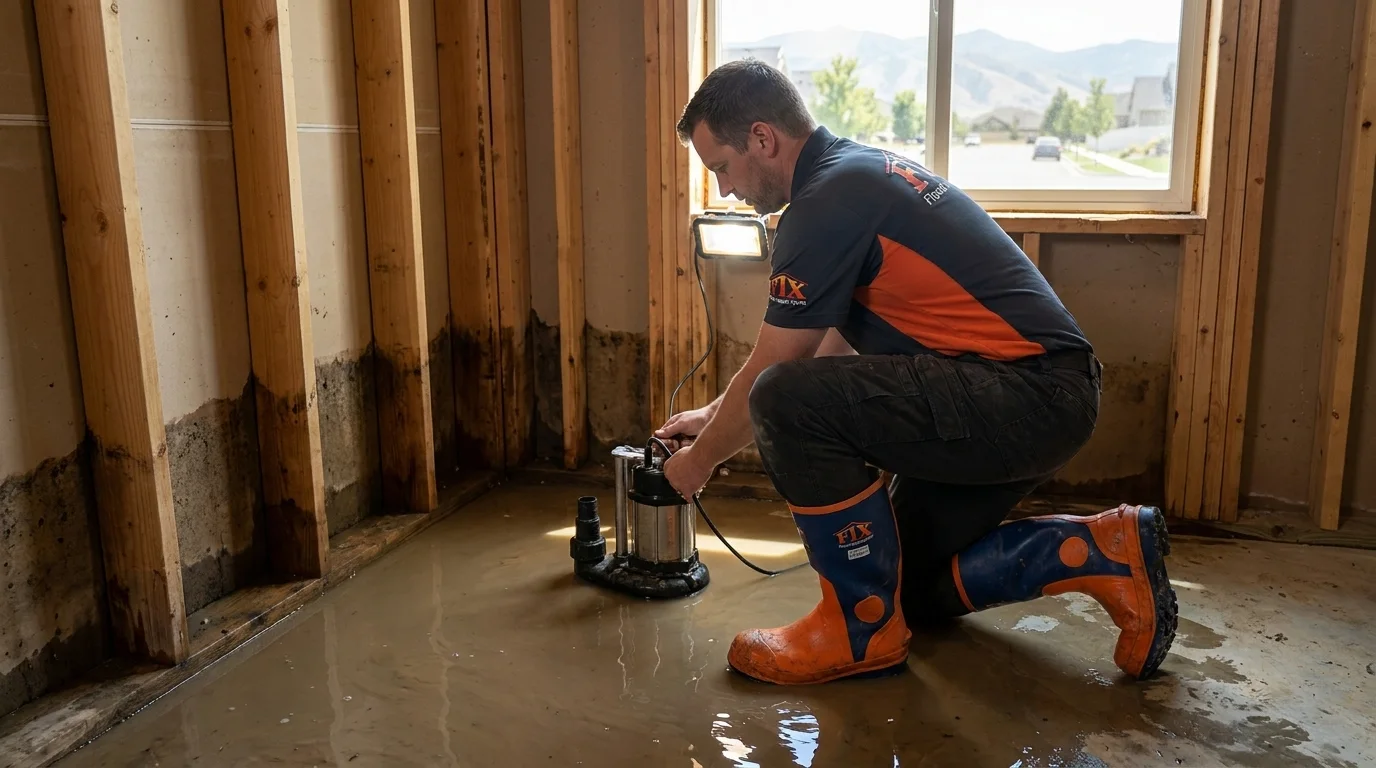
Emergency Basement Flooding Cleanup in American Fork
Emergency basement flooding cleanup in American Fork and surrounding areas. Insurance billing accepted. Call (801) 930-9750.
Water in the basement overnight? A failed sump pump, a cracked foundation seam, or a surcharged floor drain can put an inch or more of standing water across a finished basement before anyone notices, usually discovered when someone walks downstairs to wet carpet or a baseboard that’s swollen and dark. Call now for emergency service. The longer water sits against drywall, framing, and carpet pad, the more of the basement has to come out rather than just dry.
What basement flooding cleanup actually involves
Basement flooding cleanup starts with getting standing water off the floor fast, using submersible pumps for anything deeper than an inch or two and truck-mounted extractors for carpet and pad. From there the work shifts to the materials that absorbed water: carpet pad almost always gets discarded, drywall gets cut at a measured height above the waterline, and baseboards come off to check for wicking into the wall cavity. Because basements are below grade, drying takes longer than an upstairs room with windows and airflow. Commercial dehumidifiers and air movers run for several days while moisture readings are tracked in the framing, subfloor, and any exposed insulation until materials read dry, not just dry to the touch.
Our process
- Water extraction - pumps and extractors remove standing water and pull as much moisture as possible out of carpet and pad before drying equipment goes in.
- Material assessment and removal - carpet pad, ruined baseboard, and drywall below the flood-cut line are removed; anything salvageable stays and gets dried in place.
- Structural drying - dehumidifiers and air movers are sized to the square footage and run continuously, with placement adjusted as readings change.
- Moisture monitoring - a moisture meter checks framing, subfloor, and wall cavities daily so drying stops when the structure is actually dry, not on a fixed schedule.
- Source and drainage check - the sump pump, floor drain, or foundation crack that let water in gets flagged so it can be addressed before the next storm or snowmelt.
What separates a good basement flooding response from a bad one
The most common mistake in basement water cleanup is treating the surface instead of the structure. Carpet can feel dry within a day while the pad underneath, or the drywall behind the baseboard, stays saturated and starts supporting mold growth within 24 to 48 hours. A flood cut made too low, or skipped entirely because the drywall “looks fine,” leaves wet material sealed inside a wall cavity where nobody will see it until there’s a smell or a stain months later. Finished basements also tend to have insulation batts against the foundation wall, and wet insulation loses its R-value and stays damp long after the surrounding drywall tests dry, so it has to be pulled and checked directly rather than assumed. Insurance adjusters look closely at moisture logs, photos of the flood-cut height, and whether drying equipment was sized correctly for the square footage, so documentation at each stage matters as much as the drying itself.
What does basement flooding cleanup cost?
Costs vary with how much water came in, how long it sat before cleanup started, and whether sewage or groundwater was involved. These are typical industry ranges, not a quote, since every basement and every loss is different; FIX Restoration provides a written scope before any work begins so you know what’s included.
| Scenario | Typical range |
|---|---|
| Small area, clean water, quick response | $1,000 - $2,500 |
| Finished basement, carpet and pad removal | $2,500 - $6,000 |
| Drywall, insulation, and baseboard replacement | $4,000 - $9,000 |
| Sump pump failure with standing water 24+ hours | $5,000 - $12,000 |
| Groundwater or sewage backup (Category 3) | $8,000 - $20,000+ |
Homeowners insurance typically covers sudden and accidental water damage, such as a sump pump or appliance failure, but often excludes groundwater seepage or surface flooding unless a separate flood policy is in place, so it’s worth checking your policy’s water damage language before you assume coverage.
Seasonal & regional considerations
American Fork sits at the base of the Wasatch Range, and spring runoff from mountain snowmelt raises the water table across Utah Valley for weeks at a time, which is when sump pumps work hardest and are most likely to fail under sustained load. Many homes here have daylight or finished basements built into clay-heavy soil, and that soil holds water against foundation walls longer than sandier ground, so a slow seep after heavy rain or rapid snowmelt can go unnoticed until carpet or baseboard starts showing it. Winter freeze-thaw cycles also stress foundation cracks that were fine the rest of the year, which is why basement leaks tend to cluster around late winter and early spring.
Service area
FIX Restoration handles basement flooding cleanup in American Fork and throughout Utah County, including Lehi, Highland, Pleasant Grove, Orem, and Lindon.
If your basement has standing water or carpet that’s gone soft underfoot, schedule your basement water assessment now so drying can start before the drywall and framing absorb more than they can shed.
Frequently Asked Questions
Does homeowners insurance cover basement flooding cleanup?
How long does it take to dry out a flooded basement?
What is a flood cut and why does my drywall need one?
Should I remove my own belongings before cleanup starts?
How soon can mold start growing after a basement floods?
Looking for the best basement flooding cleanup company in American Fork?
FIX Restoration provides basement flooding cleanup in American Fork, UT and the surrounding area, and has served local property owners since 2012. Customers rate us 4.9 out of 5 stars across 558 Google reviews. We answer calls 24/7 — call (801) 930-9750 for immediate help.
Need Basement Flooding Cleanup now?
We respond 24/7 across American Fork and surrounding UT cities.
Related Coverage
- Our Restoration Services
- Contact FIX Restoration
- Restoration Services in Alpine
- Restoration Services in Bluffdale
- Restoration Services in Cedar Fort
- Restoration Services in Cedar Hills
- Restoration Services in Cottonwood Heights
- Restoration Services in Draper
- Restoration Services in Eagle Mountain
- Restoration Services in Herriman
- Restoration Services in Highland
- Restoration Services in Lehi
- Restoration Services in Lindon
- Restoration Services in Orem