
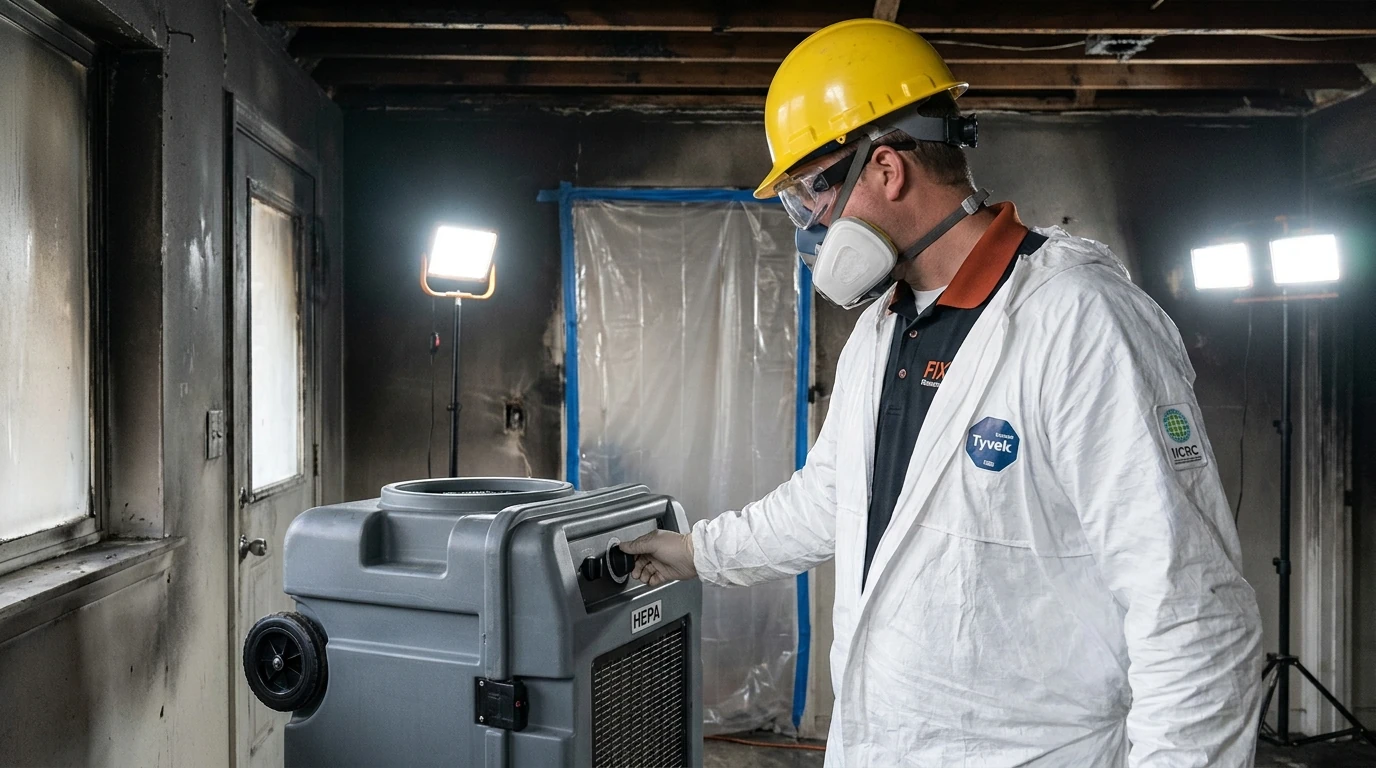
TL;DR: Fire & smoke restoration is the process of stabilizing a fire-damaged property, removing soot and smoke odor from every surface, cleaning or storing salvageable contents, and rebuilding what burned. A typical residential fire job runs anywhere from a few days for light smoke damage to several months when structural rebuild is involved. Insurance usually covers it under the dwelling and personal property portions of a homeowners policy, provided the fire is documented properly from day one.
If you’re standing in a house in Highland with soot on the ceiling and a lingering burnt smell two days after the fire trucks left, you already know the fire itself was only the first problem. Smoke travels through HVAC ducts, settles into drywall pores, and clings to fabric and wood in ways that a shop vac and an open window won’t fix. Whether the fire was contained to a kitchen or spread through the attic, the restoration process is what actually determines whether your home smells and looks normal again, or whether that smell comes back every humid afternoon for the next two years.
What Does Fire & Smoke Restoration Actually Involve?
Fire and smoke restoration is a multi-phase process that stabilizes the property, removes soot residue and combustion odor from every affected surface, and restores or rebuilds anything the fire, water, or smoke destroyed. It is not the same job as fire suppression, and it’s not just a deep clean.
The first phase is emergency stabilization: boarding up broken windows or a burned-through roof section, tarping exposed areas, and shutting off compromised utilities so the property doesn’t take on more damage from weather or looting. From there, crews assess the fire’s classification. Utah’s dry climate means grease and electrical fires often burn hot and fast, producing dense black soot that’s harder to remove than the drier gray soot from a slow-smoldering fire.
Soot removal follows IICRC S700 fire restoration standards, which call for HEPA vacuuming, dry chemical sponging on porous surfaces, and wet cleaning on non-porous ones before any deodorization begins. Skipping straight to an air freshener or ozone treatment without removing the soot particles first is the single most common reason a fire-damaged home still smells like smoke months later.
How Long Does Fire & Smoke Restoration Take?
Most fire restoration jobs take between one and eight weeks, depending on how much of the structure burned versus how much just took on smoke and soot. A single-room kitchen fire with light smoke migration can often be cleaned, deodorized, and repainted in under two weeks. A fire that reached the attic or required roof and framing replacement can run two to four months once general contracting work is added in.
Three factors drive the timeline more than anything else: how far the fire spread structurally, how much water was used to put it out (which brings a secondary water damage job into the mix), and how long contents need to sit in an ozone chamber or ultrasonic wash before they’re deodorized enough to bring back inside.
Homes near American Fork Canyon and the foothill lots along the Alpine Highway in Highland often have wood siding, exposed timber framing, or cedar shake roofing, materials that hold smoke odor longer than drywall and require more aggressive thermal fogging or hydroxyl treatment to fully clear.
![section image placeholder]
What Should You Watch Out for When Hiring a Restoration Company?
The biggest mistake homeowners make after a fire is treating soot removal and odor removal as optional add-ons instead of core parts of the job. A company that only offers to “clean up” without a documented deodorization protocol is setting you up for a house that still smells like smoke after the drywall is repainted.
Ask any restoration company three things before you sign a scope of work: Do they document pre-loss condition with photos for the insurance file? Do they follow a written protocol for soot removal versus just wiping surfaces down? And do they handle contents restoration and storage on-site, or does everything get shipped to a third party you have no visibility into?
Also watch for scope creep in the wrong direction: a fire that damaged one bedroom shouldn’t turn into a full-home repaint unless smoke actually traveled through the HVAC system into other rooms. A legitimate company will show you smoke staining or test results before expanding the job, not just estimate high and hope the adjuster doesn’t push back.
What Should You Do First After a Fire?
The first thing to do after the fire department clears the property is document everything before you touch anything, then call your insurance carrier and a restoration company on the same day. Photograph every room, even ones that look untouched, because smoke damage isn’t always visible until a few days pass.
Don’t run fans or open windows to “air it out” before a professional assessment. That spreads soot particles into rooms that weren’t originally affected and can turn a one-room job into a whole-house odor problem. Don’t attempt to wash soot off walls with water either. It smears into the drywall texture and makes later removal harder.
FIX Restoration handles the full sequence for Utah County homeowners: emergency board-up and tarping to stop further damage, fire damage restoration and soot removal, odor removal and deodorization, contents restoration and storage while the structure dries and repairs happen, and general contracting to rebuild anything that didn’t survive. If secondary water damage or mold shows up from the firefighting effort, that gets handled under the same scope instead of a separate contractor.
Schedule a fire damage assessment as soon as the property is cleared by the fire marshal. Every day soot sits untreated on painted surfaces and fabric, it becomes harder and more expensive to remove completely.
About FIX Restoration
FIX Restoration is a locally owned and operated, licensed and insured restoration company serving American Fork, Highland, and the surrounding Utah County area since 2012. Their crews handle fire damage restoration, odor removal, contents restoration and storage, emergency board-up and tarping, water and sewage cleanup, mold remediation, storm damage restoration, roofing, and general contracting rebuild work across Utah County.