
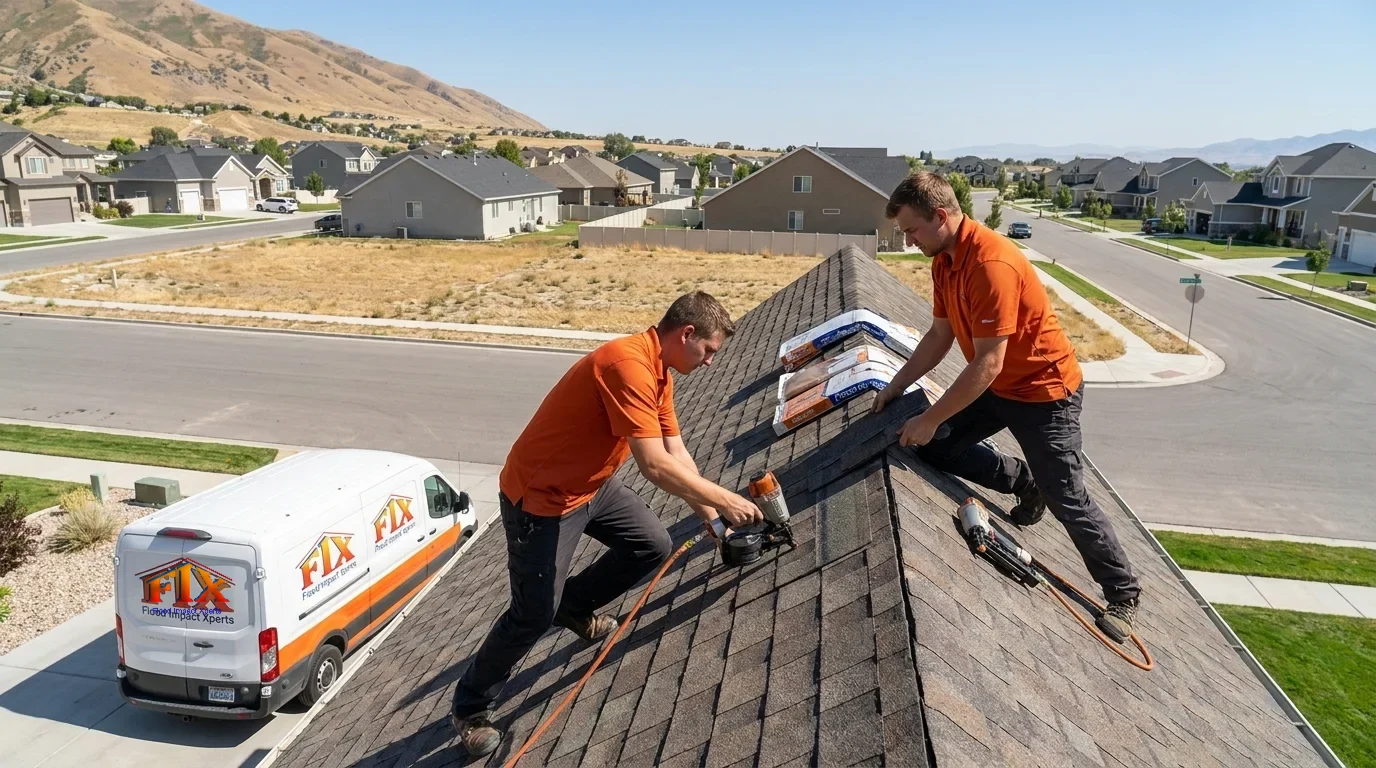
Roofing Installation and Replacement in American Fork
Roofing installation and replacement in American Fork and surrounding areas. Insurance billing accepted. Call (801) 930-9750.
A roof that looks fine from the curb can be hiding failing underlayment, cracked decking, or flashing that has long since separated from the chimney or dormers. By the time water shows up on a ceiling, the damage underneath is usually months old. Whether you’re replacing a roof that has reached the end of its service life or installing new roofing on an addition or new build, the quality of what goes under the shingles matters just as much as what you see from the street.
What roofing installation and replacement actually involves
A full roof replacement is more than pulling off old shingles and nailing down new ones. The work begins at the deck: inspecting and replacing any rotted or delaminated sheathing before a single layer of new material goes on. From there, a proper installation includes a code-compliant underlayment (typically a synthetic or self-adhering ice-and-water barrier in Utah’s climate zones), correctly lapped and fastened so wind-driven rain and snowmelt cannot migrate underneath. Drip edge, valley flashing, step flashing around penetrations, and ridge ventilation all have to be sequenced correctly, each one sets up the next.
On a standard single-family home, a full replacement typically takes one to two days for the tear-off and installation crew, with a follow-up inspection to confirm ridge cap alignment, fastener patterns, and flashing seals. New construction installations follow a similar sequence but are coordinated around framing and rough inspection schedules.
Material choices affect both cost and longevity: architectural (dimensional) asphalt shingles are the most common choice in American Fork and the broader Utah Valley area, but metal roofing, concrete tile, and synthetic slate each have specific installation requirements that differ from standard shingle work.
Our process
-
Roof assessment and scope development. Before any material is ordered, a detailed inspection documents the current deck condition, existing layers, flashing status, ridge and soffit ventilation, and any penetrations (plumbing vents, HVAC, skylights). The written scope identifies what is being replaced versus what can be retained, and flags any structural repairs needed before installation begins.
-
Material selection and permitting. FIX Restoration pulls the required building permit with Utah County or the relevant municipality. Material selection is confirmed at this stage, including shingle manufacturer, color, and any upgraded underlayment or ventilation components. Permit requirements in Utah Valley typically include a final inspection by the local building department.
-
Tear-off and deck preparation. Existing roofing is removed down to the sheathing. Every square foot of decking is inspected; soft spots, delamination, and rot are cut out and replaced with matching thickness material before anything else proceeds. This step is non-negotiable: new roofing installed over compromised decking will fail prematurely regardless of shingle quality.
-
Underlayment, flashing, and installation. Ice-and-water shield is applied at all eaves, valleys, and penetration points. Synthetic underlayment covers the field. Drip edge is installed to code. Shingles are laid in the manufacturer’s specified pattern with the correct fastener count per shingle, a detail that directly affects wind-resistance ratings and warranty validity. All flashing is set in roofing sealant and mechanically fastened.
-
Final inspection and cleanup. A post-installation walkthrough confirms fastener patterns, ridge cap alignment, flashing seals, and that all penetrations are properly counter-flashed. Magnetic rollers are used across the yard and driveway to recover roofing nails. The building department inspection is scheduled and the permit is closed out.
What separates a good roof installation from a bad one
The most common failure point in residential roofing is flashing, not shingles. Step flashing at walls and dormers, counter-flashing at chimneys, and valley flashing at roof intersections are where water finds its way in. Contractors who use continuous bent flashing instead of properly overlapped step flashing, or who rely on sealant alone without mechanical fastening, are setting up a leak that may not show up for two or three seasons.
Fastener count is the second most-missed detail. Most architectural shingles require four to six nails per shingle depending on the roof pitch and wind zone. Under-fastened shingles can void the manufacturer’s wind warranty and are the first to lift in a storm. Insurance adjusters reviewing storm damage claims often look at fastener patterns when determining whether a failure was installation-related or weather-related.
Ventilation is the third area where shortcuts cost homeowners money. Inadequate attic ventilation causes heat to build up under the roof deck in summer and moisture to accumulate in winter, both of which shorten shingle life and can cause decking to delaminate. A properly designed system balances intake at the soffits with exhaust at the ridge.
What does roofing installation and replacement cost?
Typical costs for residential roofing work vary based on roof size, pitch, material choice, and the condition of the existing deck. Most homeowners pay somewhere in the ranges below, based on industry-typical figures for the Intermountain West region. Every loss and every roof is different, and FIX Restoration provides a written scope of work before any project begins so you know exactly what is included. Homeowners insurance typically covers roof replacement when the damage is caused by a covered peril such as hail, wind, or fire, but generally does not cover replacement due to age or wear.
| Scenario | Typical range |
|---|---|
| Single-story home, asphalt shingles, good deck condition | $8,000 - $14,000 |
| Single-story home, asphalt shingles, partial deck replacement needed | $10,000 - $18,000 |
| Two-story or steep-pitch home, asphalt shingles | $14,000 - $24,000 |
| Metal roofing (standing seam or corrugated), single-story | $18,000 - $32,000 |
| Insurance claim replacement (hail or wind damage) | Varies by adjuster scope; supplement common |
| New construction installation, asphalt shingles | $6,000 - $12,000 |
Seasonal and regional considerations
Utah Valley’s climate creates a specific set of roofing challenges. Freeze-thaw cycles through late fall and early spring put stress on flashing seals and can force water under shingles that have even minor lifting at the edges. Ice damming is a real risk on lower-pitched sections of roofs that face north or are shaded by mature trees, particularly in neighborhoods along the Wasatch foothills where snow sits longer. Ice-and-water shield installed well above the eave line is the correct response, not just at the first course.
Hail is the dominant insurance claim driver in Utah County. Hailstorms tracking northeast from the west desert can deposit large-diameter hail with minimal warning, and granule loss from hail impact is not always visible without getting on the roof. If your neighbors are having roofs replaced after a storm, it is worth having your own roof inspected before filing a claim deadline passes.
Summer installation is generally straightforward in American Fork’s dry climate, but high-UV exposure means shingles should be installed with the manufacturer’s recommended exposure and not left on the pallet in direct sun for extended periods before installation.
Service area
FIX Restoration is based in American Fork and serves homeowners and property managers throughout Utah County and the surrounding region, including Lehi, Pleasant Grove, Lindon, Orem, Provo, Eagle Mountain, Saratoga Springs, and Cedar Hills. City-specific pages for each community link back here for full service details.
If your roof is showing its age, you’ve had a recent hailstorm, or you’re building new and need a roofing contractor who pulls permits and closes them out, call FIX Restoration at (801) 930-9750 to schedule a roof assessment and get a written scope before any work begins.
Frequently Asked Questions
Does homeowners insurance cover roof replacement?
What is the difference between a roof repair and a full roof replacement, and how do I know which one I need?
How long does a typical residential roof replacement take from start to finish?
What roofing materials hold up best in Utah Valley's climate?
What should I look for after a hailstorm to know if my roof was damaged?
Looking for the best roofing installation and replacement company in American Fork?
FIX Restoration provides roofing installation and replacement in American Fork, UT and the surrounding area, and has served local property owners since 2012. Customers rate us 4.9 out of 5 stars across 558 Google reviews. We answer calls 24/7 — call (801) 930-9750 for immediate help.
Need Roofing Installation and Replacement now?
We respond 24/7 across American Fork and surrounding UT cities.
Related Coverage
- Our Restoration Services
- Emergency Storm Damage Restoration in American Fork
- Emergency Board-Up and Tarping in American Fork
- Emergency Water Damage Restoration in American Fork
- Contact FIX Restoration
- Roofing Installation and Replacement in Alpine
- Roofing Installation and Replacement in Bluffdale
- Roofing Installation and Replacement in Cedar Fort
- Roofing Installation and Replacement in Cedar Hills
- Roofing Installation and Replacement in Cottonwood Heights
- Roofing Installation and Replacement in Draper
- Roofing Installation and Replacement in Eagle Mountain
- Roofing Installation and Replacement in Herriman
- Roofing Installation and Replacement in Highland
- Roofing Installation and Replacement in Lehi
- Roofing Installation and Replacement in Lindon
- Roofing Installation and Replacement in Orem
- Roofing Installation and Replacement in South Jordan
- Roofing Installation and Replacement in Riverton
- Roofing Installation and Replacement in Spanish Fork
- Roofing Installation and Replacement in Pleasant Grove