
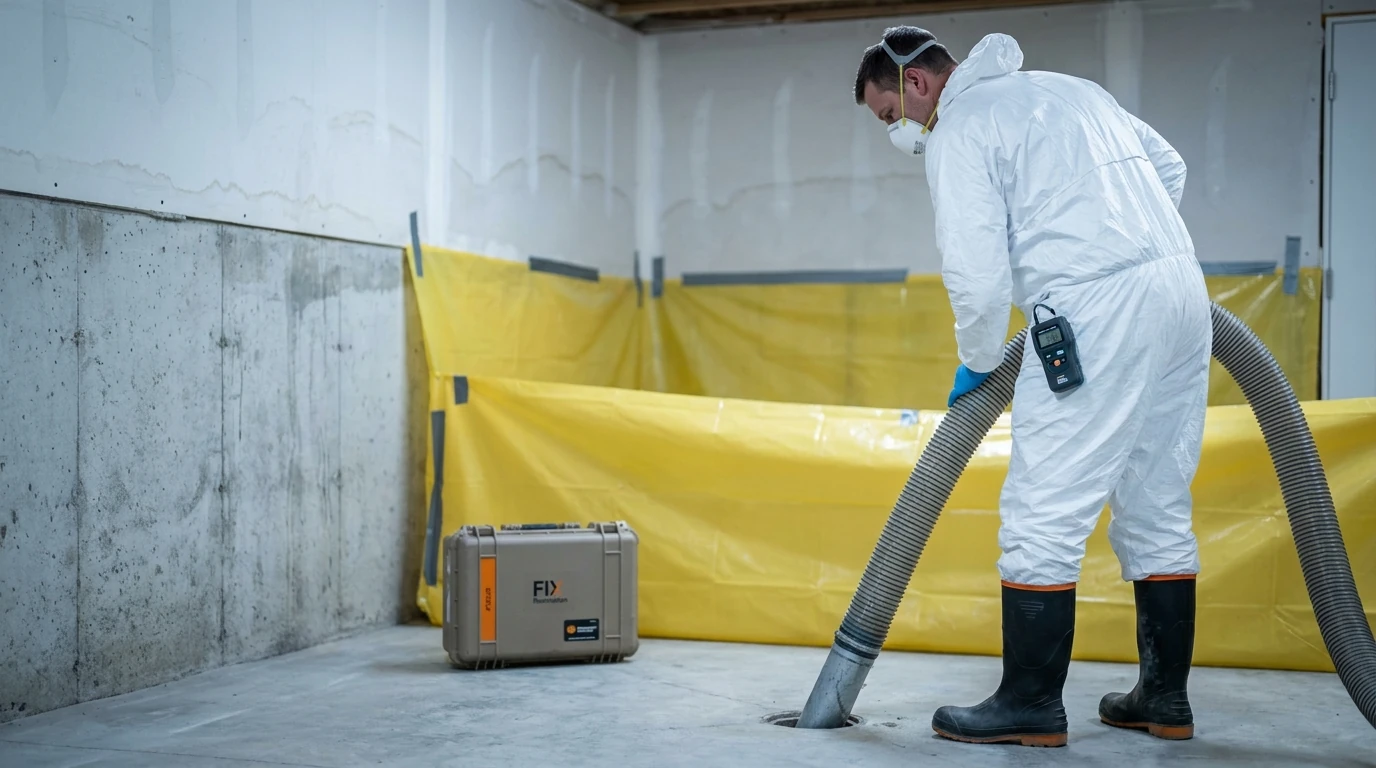
TL;DR: Sewage backup is a Category 3 biohazard. Don’t touch it, don’t run fans, and don’t try to clean it yourself. A licensed remediation crew needs to extract the waste, remove contaminated materials, apply EPA-registered disinfectants, and verify the space is safe before anyone re-enters. In Orem, UT, most homeowners’ policies cover sudden sewage backups if they added a sewer backup rider. Call your insurer, then call a remediation company.
You walked into your basement and the floor drain is overflowing. Or the toilet backed up and the water is dark. Maybe it’s a main line clog, maybe it’s a city sewer surcharge after heavy rain, maybe it’s a failed ejector pump. Whatever the cause, the material on your floor is Category 3 water, also called black water, and it contains bacteria, viruses, and parasites at levels that can make people sick from contact or even from breathing the air nearby. The next 30 minutes matter.
What Makes Sewage Backup Different from a Regular Water Leak?
Sewage backup is classified as Category 3 water under the IICRC S500 standard, the industry’s primary technical reference for water damage remediation. Category 3 water is grossly contaminated and includes sewage, rising floodwater, and any water that has touched human waste. Category 1 (clean water from a broken supply line) and Category 2 (gray water from an appliance or toilet overflow without feces) are serious, but Category 3 requires a completely different response.
The key differences: porous materials like carpet, drywall, and wood flooring that get saturated with Category 3 water almost always have to be removed, not dried in place. You cannot extract the contamination from a carpet pad. You cannot dry-and-save drywall that has absorbed sewage. Attempting to do so leaves pathogens behind and creates conditions for mold growth within 24 to 48 hours.
For Orem properties specifically, older neighborhoods near Center Street and the areas around UVU often have aging cast-iron lateral lines that are prone to root intrusion and collapse. A camera inspection of your line after a backup is worth the cost.
What Should You Do in the First 30 Minutes?
Stop the source first, then protect yourself and your family.
- Don’t enter the space if the water is above ankle level or if there’s any chance of electrical contact. Sewage water conducts electricity. Turn off the circuit breaker for the affected area if you can do so safely from a dry location.
- Don’t run HVAC or fans. This spreads aerosolized contamination through your ductwork and into clean areas of the home.
- Don’t use any drains in the building until a plumber confirms the blockage is cleared. Running water upstairs will add volume to the backup.
- Call a plumber to clear the blockage if it’s a clog. Call a remediation company to handle the cleanup. These are two different jobs.
- Photograph everything before anyone touches it. Your insurance adjuster will need documentation of the damage as it was found.
- Ventilate if you can do so safely by opening windows and exterior doors to the affected space only, without running interior fans.
If you have children, elderly family members, or anyone immunocompromised in the home, move them out of the building until the remediation is complete. The EPA’s guidance on mold and moisture covers the health risks of microbial contamination in indoor spaces.
How Does Professional Sewage Remediation Work?
A licensed remediation crew follows a structured process that mirrors the IICRC S500 and the companion S520 standard for mold. Here’s what each phase involves:
1. Containment. Before any extraction begins, the crew seals off the affected area with poly sheeting and sets up negative air pressure using HEPA-filtered air scrubbers. This keeps contaminated air from migrating into clean areas of the building.
2. Extraction. Standing sewage is removed using truck-mounted or portable extractors. This is not a wet-vac job. Commercial extraction equipment moves high volumes quickly and is sealed to prevent operator exposure.
3. Material removal. Saturated porous materials are removed and bagged: carpet, carpet pad, drywall to a height at least 12 inches above the visible waterline (often higher, because wicking travels upward through drywall paper), insulation, and any wood framing that cannot be adequately dried and treated. In Utah, removed materials go to licensed disposal facilities.
4. Disinfection. All hard surfaces, framing, and concrete are treated with EPA-registered disinfectants rated for Category 3 contamination. This is not bleach from a spray bottle. Commercial-grade antimicrobials are applied at proper dwell times and concentrations.
5. Drying. After contaminated materials are out and surfaces are treated, the drying phase begins using commercial LGR dehumidifiers and air movers. Moisture readings are taken at multiple points using calibrated meters. Drying is not complete until readings return to pre-loss reference levels, typically 3 to 5 days depending on the extent of saturation and Orem’s ambient humidity.
6. Clearance. A final inspection confirms the space is dry and safe before reconstruction begins. Some insurers require ATP testing (adenosine triphosphate surface testing) or air sampling to verify microbial levels are acceptable.
For a look at how the water damage drying process works in general, the post on what to do in the first 24 hours after water damage covers the timeline and decisions well.
Will Homeowners Insurance Cover Sewage Backup in Orem?
Standard homeowners policies in Utah typically do NOT cover sewage backup by default. Coverage requires a sewer backup endorsement, sometimes called a water backup rider, added to the base policy. The cost is usually $50 to $150 per year and the coverage limit is often $5,000 to $25,000 depending on the policy.
If you have the rider, here’s what the claims process typically looks like:
- File promptly. Most policies require you to report the loss within a specific window, often 24 to 72 hours.
- Document before cleanup. Photos and video of the damage as found. If a remediation crew starts work before you document, the adjuster may dispute the scope.
- Get a written scope of work. A reputable remediation company will provide a detailed written estimate before work begins, itemized by phase. This is what the adjuster reviews.
- Keep all receipts. Temporary housing, personal property damaged, meals if the home is uninhabitable. These may be covered under Additional Living Expenses.
If the backup was caused by a city sewer surcharge (the municipal system overwhelmed and pushed back into your lateral), you may have a separate claim against the city. Utah municipalities have specific notice requirements for these claims, and the window is short.
For a broader look at what homeowners policies typically cover and exclude, the post on does homeowners insurance cover water damage is a useful companion read.
What Happens If You Wait or Try to DIY?
Sewage cleanup has a hard deadline. Mold growth begins within 24 to 48 hours in saturated materials. Once mold establishes in drywall or framing, the remediation scope expands significantly and costs rise. More importantly, Category 3 contamination that isn’t fully removed continues to off-gas and creates ongoing health risk for anyone in the building.
Common DIY mistakes that make things worse:
- Running a box fan to “dry things out” (spreads contamination, accelerates mold growth in adjacent areas)
- Using household bleach as the only disinfectant (doesn’t penetrate porous materials, doesn’t meet EPA standards for Category 3 remediation)
- Leaving wet carpet in place because it “looks dry on top” (the pad underneath stays saturated)
- Not removing drywall to the full wicking height (leaves contamination inside the wall cavity)
If you’re in Orem and dealing with a backup right now, FIX Restoration handles sewage cleanup and remediation across Utah County, including Orem, Provo, and surrounding cities. Call (801) 930-9750 to schedule an assessment.
For any sewage backup, the right sequence is: stop the source, document the damage, call your insurer, and get a licensed remediation crew on-site before the 24-hour mark. The cleanup is not optional and the timeline is real.
About FIX Restoration
FIX Restoration is a licensed and insured restoration company serving Orem, American Fork, Provo, and the broader Utah County area since 2012. Their crews handle sewage cleanup, water damage restoration, mold remediation, fire damage restoration, biohazard cleanup, storm damage restoration, and contents restoration across the region. They provide written scopes before work begins and work directly with homeowners and insurance adjusters throughout the claims process.