
TL;DR: General contracting for reconstruction and renovation in Lehi, UT covers everything from rebuilding after water, fire, or storm damage to planned kitchen and bathroom remodels. A licensed general contractor manages subcontractors, pulls permits, and coordinates the full scope so you get one point of contact from demo to final walkthrough. Costs vary by project size, but having a contractor who also handled the mitigation means faster insurance documentation and fewer gaps between phases.
Your adjuster just closed the claim, the mitigation crew has packed up, and now you are staring at open walls, missing drywall, and a kitchen that looks nothing like it did before the pipe burst. Or maybe the damage was the last straw and you have been meaning to renovate anyway. Either way, the next step is a licensed general contractor who can take the project from rough framing to finished space. In Lehi, UT, where newer subdivisions near Thanksgiving Point and established neighborhoods along State Street both see their share of water and storm losses, that transition from mitigation to rebuild is where projects either stay on track or fall apart.
What Does a General Contractor Actually Do on a Reconstruction Project?
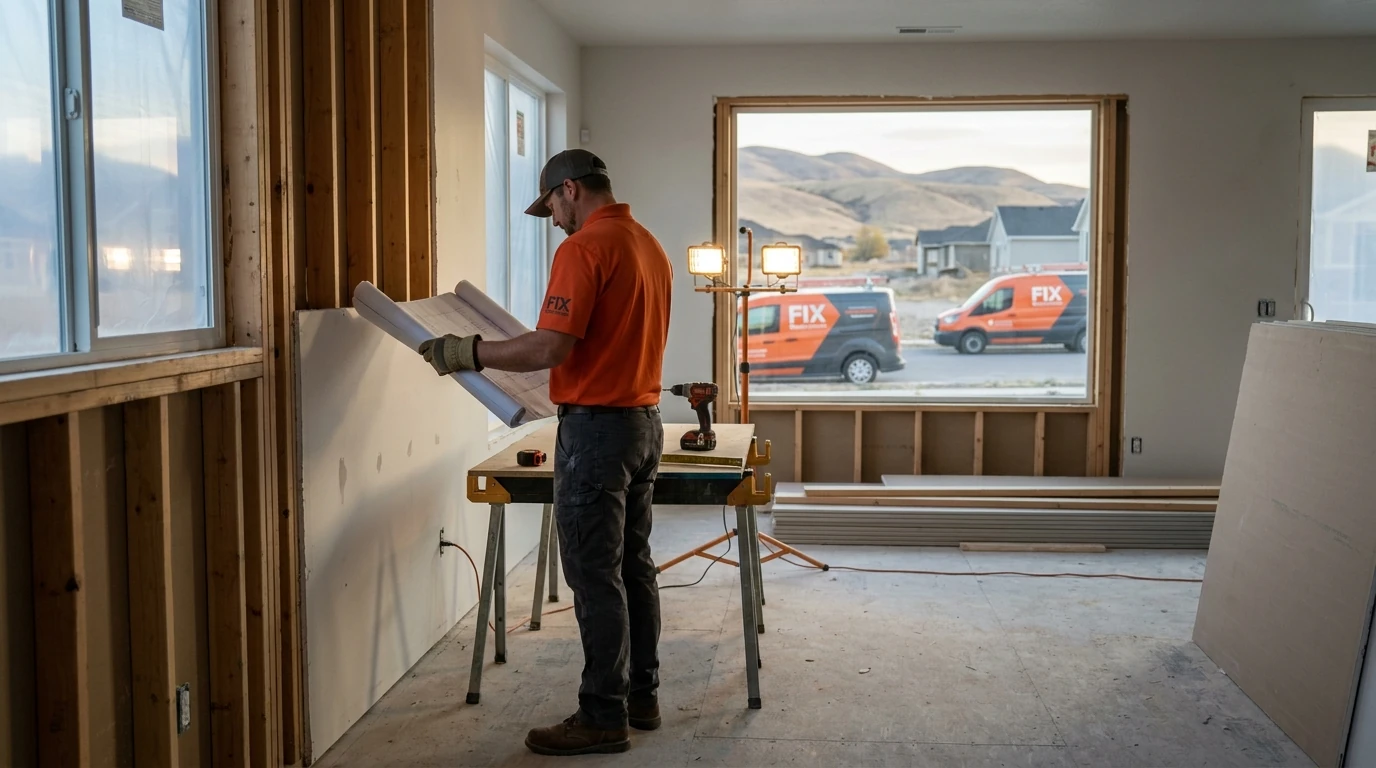
A general contractor manages every trade on your project: framers, drywall crews, electricians, plumbers, painters, and finish carpenters. They pull the permits, schedule inspections, and are the single person accountable for the finished result. On a reconstruction job after a covered loss, they also work directly with your insurance adjuster to document the scope of repairs so the rebuild matches what was damaged.
For homeowners coming out of a water or fire loss, the GC role is especially important because the line between mitigation (stopping the damage) and reconstruction (fixing it) is where most delays happen. When the same company handles both phases, the scope is already documented, the moisture readings are on file, and the rebuild can start as soon as the structure is dry and the claim is approved. You are not starting over with a new contractor who has never seen the property.
On a planned renovation project, the GC role is similar: one licensed professional coordinates all the trades, keeps the project on schedule, and is responsible for code compliance at every inspection point.
What Reconstruction Projects Look Like After a Covered Loss
Post-disaster reconstruction in Lehi typically falls into a few categories depending on what caused the damage.
Water damage reconstruction is the most common. After a burst pipe, appliance failure, or Category 2 or 3 water intrusion, drywall is cut out, flooring is removed, and sometimes cabinetry or structural framing needs to be replaced. Once the structure passes a final moisture clearance, the rebuild phase begins: framing repairs, insulation, drywall, texture, paint, flooring, and cabinet reinstallation. The IICRC S500 standard defines the drying benchmarks that must be met before reconstruction starts. Rebuilding over wet materials causes mold and voids the repair.
Fire and smoke damage reconstruction involves more complexity. Charred framing may need to be sistered or replaced. Smoke-affected drywall and insulation are removed. HVAC systems are inspected and often cleaned or replaced. Electrical panels and wiring in affected areas are reviewed by a licensed electrician before drywall goes back up. The EPA’s guidance on indoor air quality after fire damage applies here, particularly if the fire involved synthetic materials that leave chemical residue.
Storm damage reconstruction in Utah County often means roof decking, fascia, and exterior siding after hail or wind events. In Lehi’s newer developments, composite roofing and vinyl siding are common, and matching materials to existing finishes is part of the scope. See our post on storm and wind damage restoration for what the mitigation phase looks like before reconstruction begins.
Sewage backup reconstruction requires extra steps. After a Category 3 water loss, affected materials are removed and the area is sanitized before any rebuild work begins. Drywall, subfloor, and insulation in the affected zone are typically replaced entirely, not dried in place.
What the Reconstruction Process Looks Like, Step by Step
Knowing the sequence helps you set realistic expectations and have the right conversations with your adjuster.
-
Scope and estimate. The GC walks the property, reviews the mitigation documentation, and writes a line-item scope of repairs. On insurance jobs, this scope is submitted to the adjuster for approval before work starts. On renovation projects, this becomes the contract.
-
Permit pull. Most structural, electrical, and plumbing work in Lehi requires a permit through the Lehi City Building Department. Your GC handles this. Skipping permits creates problems at resale and can void your homeowners policy coverage for the repair.
-
Demo and rough work. Any remaining damaged material is removed. Framing repairs, rough plumbing, and rough electrical happen before walls close.
-
Inspections. The city inspector signs off on rough work before insulation and drywall go in. This is non-negotiable and protects you.
-
Drywall, texture, and paint. Walls and ceilings are rebuilt to match existing finishes. Texture matching in Utah County homes (which often have knockdown or orange peel) takes skill to blend invisibly.
-
Finish work. Flooring, trim, cabinets, fixtures, and hardware are installed. This is where the project starts looking like a home again.
-
Final inspection and punch list. The city does a final inspection. The GC walks the project with you and addresses any items that need adjustment.
-
Insurance closeout. On covered losses, the GC provides final invoices and documentation to close the claim. Supplements for hidden damage discovered during demo are submitted at this stage.
What About Planned Renovations? Does a Restoration Company Handle Those?
Yes. General contracting for planned renovations, kitchen remodels, bathroom updates, and finish upgrades is a separate service from disaster restoration, but the skill set overlaps significantly. A restoration GC who works in Lehi’s housing stock every week knows the local subcontractors, knows the permit process at Lehi City, and knows how Utah County homes are built. That local knowledge matters when you are matching existing finishes or dealing with a home built in the early 2000s that has its own quirks.
For homeowners who experienced a loss and want to upgrade while the walls are already open, this is the most efficient moment to do it. The drywall is coming out anyway. If you have been wanting to move a wall, update the flooring, or reconfigure a bathroom layout, doing it during the reconstruction phase saves a second round of demo costs.
If you are navigating an insurance claim alongside a renovation, read our guide on homeowners insurance and water damage coverage to understand what the policy pays for and what an upgrade costs you out of pocket. The line between “restore to pre-loss condition” and “improvement” matters to your adjuster.
How to Choose the Right General Contractor for Your Lehi Rebuild
Choosing a general contractor for reconstruction or renovation is a decision that affects your home’s value, your insurance claim, and your timeline. A few things to verify before signing a contract:
- Licensed and insured in Utah. Utah requires a general contractor license for projects over a certain threshold. Verify the license is current and active. FIX Restoration is licensed and insured.
- Experience with insurance reconstruction. Not every GC knows how to write a supplement, work with Xactimate line items, or communicate with a claims adjuster. If your project involves a covered loss, this matters.
- Local subcontractor relationships. A GC who has worked in Lehi and Utah County for years has established relationships with electricians, plumbers, and finish crews who know the local inspection process.
- Written scope before work starts. Never begin reconstruction without a signed, line-item scope of work. Verbal agreements and vague estimates create disputes.
- References from similar projects. Ask for references from homeowners who had reconstruction work done after a loss, not just new construction or cosmetic remodels.
For a broader look at vetting restoration and reconstruction companies, see our post on how to choose a restoration company.
If your Lehi home needs reconstruction after water, fire, storm, or sewage damage, or if you are ready to move forward on a planned renovation, FIX Restoration can scope the project, coordinate with your insurer, and manage the rebuild from start to finish. Call (801) 930-9750 to schedule a walkthrough.
About FIX Restoration
FIX Restoration has been serving Lehi, American Fork, and the broader Utah County area since 2012. Licensed and insured, their crews handle water damage restoration, fire damage restoration, storm damage restoration, mold remediation, sewage cleanup, emergency board-up and tarping, contents restoration and storage, and general contracting for reconstruction and renovation. They work directly with homeowners and insurance adjusters to document losses, manage the mitigation-to-rebuild transition, and deliver finished repairs across Utah County and the Salt Lake Valley.