
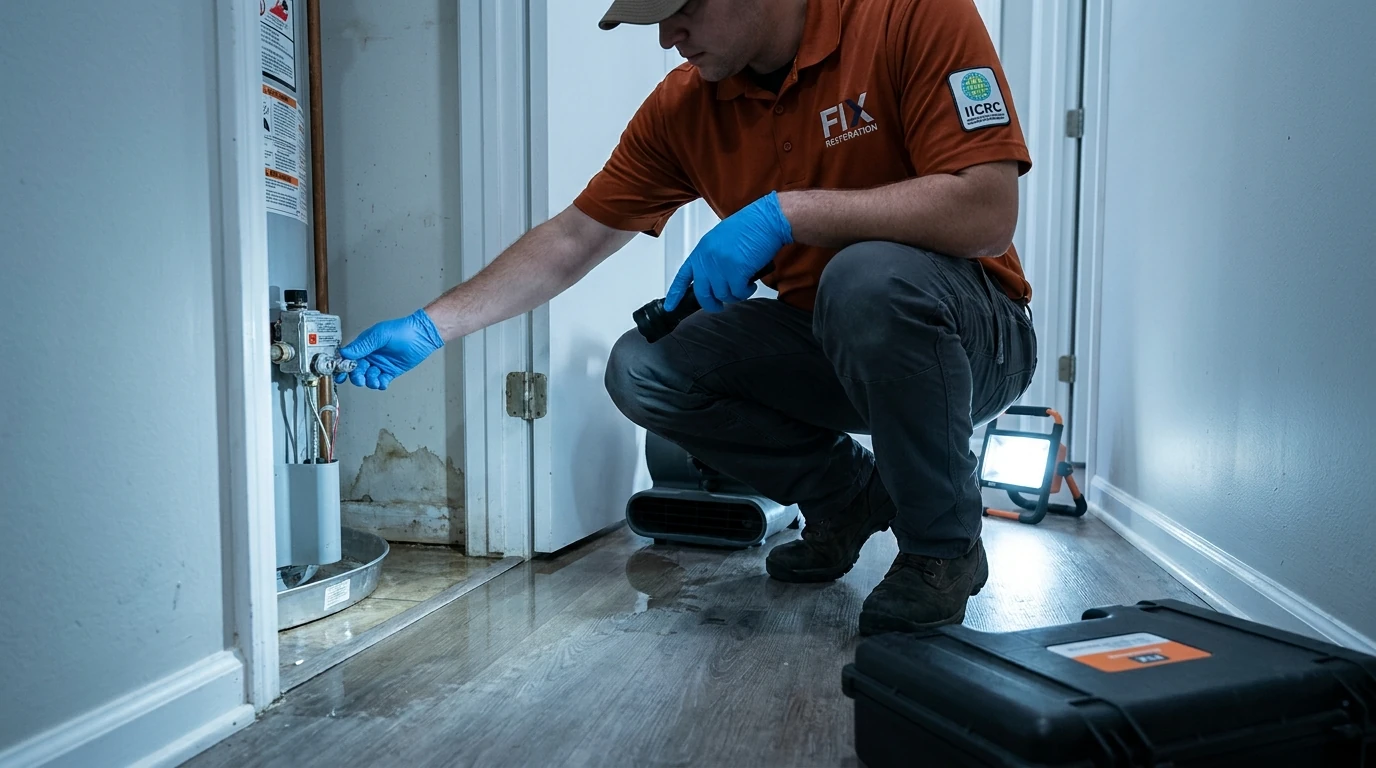
If water is actively spreading across your floor right now, go shut off the main water supply valve first, then come back to this. For most homes in Utah County, that shutoff is near the water meter, often in a utility room, crawl space, or along the front foundation wall. Once the source is stopped, the clock starts on a narrow window where your decisions will determine how much of your home you save and how large your insurance claim grows.
Stop the Water, Then Assess the Damage
The first fifteen minutes matter more than the next several hours. After shutting off the water supply (or the appliance valve at the back of a washing machine, under a sink, or behind a toilet), locate the electrical panel and cut power to any rooms with standing water. Water and live outlets are a serious hazard, and wet drywall conducts electricity further than you might expect.
Once it’s safe to walk through, take a slow pass and look for:
- Visible standing water, note the depth and how far it has spread. Water follows the path of least resistance and will travel under baseboards, beneath flooring, and into wall cavities well beyond the wet spot you can see.
- Soft or bubbling flooring, hardwood that has started to cup, laminate that is lifting at the seams, or tile grout that feels spongy underneath are signs water has already moved below the surface layer.
- Staining or sagging ceilings, if the leak originated on an upper floor or from a roof, ceiling drywall absorbs water quickly and can fail without much warning. A ceiling that looks stained but feels firm may still be holding a significant amount of water.
- The smell, a clean water leak from a supply line smells like nothing at first. A sewer backup or a leak that has been sitting for more than a day will smell distinctly different. That distinction matters for how the cleanup is classified and what protective steps you need to take.
Move Fast on These Steps, Order Matters
-
Photograph and video everything before you touch it. Walk every affected room and record the waterline, the damaged materials, and any visible source. Your insurance adjuster will want documentation of the loss as it was found, not after you’ve started pulling things up.
-
Remove standing water if you can do so safely. A wet/dry shop vac handles small amounts well. If water is more than an inch deep across a large area, that’s a job for extraction equipment with more capacity.
-
Pull up area rugs and move furniture off wet flooring. Wet rugs left on hardwood or laminate accelerate warping. Furniture legs sitting in water will wick moisture up into the piece and can leave permanent stains on flooring beneath them. Move what you can to a dry area or outside if weather permits.
-
Open windows and interior doors to start airflow, but only if the outdoor humidity is lower than indoor humidity. In Utah’s dry climate, opening up is usually helpful. On a humid summer afternoon after a storm, it may not be.
-
Call your insurance company. Most homeowner policies require prompt notice of a loss. The sooner you open a claim, the sooner an adjuster can be assigned. Ask specifically whether your policy covers the source of the leak (a burst pipe is typically covered; slow seepage from a failing seal often is not).
-
Start a written log. Note the time you discovered the water, what you did and when, and every person you spoke to, insurance reps, contractors, neighbors. This log becomes useful if there’s any dispute about the timeline of the loss.
What Not to Do in the First 24 Hours
Don’t run your HVAC system to dry things out. Forced air through a wet structure can spread mold spores that are already beginning to colonize, mold can begin growing on wet drywall and insulation within 24 to 48 hours under the right conditions. Your HVAC system can also pull moisture into ductwork, creating a secondary problem.
Don’t use a regular household vacuum on standing water. Standard vacuums are not designed for liquid and can create an electrocution hazard.
Don’t assume the surface being dry means the structure is dry. This is the most common mistake homeowners make. Concrete slabs, hardwood subfloors, and the paper facing on drywall can feel dry to the touch while the material behind or beneath them holds significant moisture. Professional moisture meters and thermal imaging cameras read what your hand cannot.
Don’t throw away damaged materials before documenting them. Wet carpet, warped flooring, and damaged cabinetry are all part of your claim. Photograph everything, and if possible, keep samples until your adjuster has seen the damage.
Don’t use fans and dehumidifiers as a substitute for professional drying in a significant loss. Consumer-grade equipment moves air and pulls some moisture, but it isn’t calibrated to the drying standards used by restoration professionals. Underdrying a structure leaves hidden moisture that leads to mold weeks later.
When to Call a Water Damage Restoration Professional
Some water damage situations are genuinely DIY-manageable: a small appliance leak caught within an hour, a contained spill on tile, a slow drip that never reached the subfloor. If the affected area is small, the water source was clean, and you can confirm the materials are dry within 24–48 hours, you may be able to handle it yourself.
Call a professional restoration company when:
- The water came from a sewage line, toilet overflow, or flood source. Contaminated water requires specific protective equipment and disposal protocols that go beyond standard cleanup.
- The water has been sitting for more than a few hours before you discovered it, or you aren’t sure how long it’s been there.
- Flooring, walls, or ceilings are affected and you can’t confirm dryness with a meter.
- The affected area is larger than roughly 10 square feet of drywall, which is the general threshold used by the EPA for recommending professional mold remediation, and mold is where unresolved water damage goes.
- You’re filing an insurance claim. A restoration company can document the loss with moisture readings, scope the affected materials accurately, and work directly with your carrier on billing.
In American Fork and throughout Utah County, the dry climate can create a false sense of security, materials dry faster here than in humid regions, but that doesn’t mean hidden moisture in wall cavities or under slab evaporates on its own.
What Recovery Looks Like After the First Day
Professional water damage restoration typically follows a structured sequence: extraction, then drying, then assessment of what can be saved versus what needs to be removed, then reconstruction. The drying phase alone, done correctly with commercial air movers and dehumidifiers, usually takes several days, not several hours. Moisture readings are taken daily to confirm the structure is reaching acceptable levels before any rebuild begins.
If mold is already visible or the water sat long enough that it’s a concern, remediation happens before reconstruction. Your restoration company should be able to walk you through what was found, what the readings show, and what the drying plan looks like, not just hand you a bill.
The first 24 hours set the trajectory for all of that. The faster the water is out and the structure is moving toward dry, the smaller the scope of work tends to be.
If you’re past the first steps and still unsure whether the damage has been fully addressed, or if you’re in the middle of it right now, FIX Restoration serves American Fork and the surrounding Utah County area. Call (801) 930-9750 to talk through what you’re dealing with and what the next steps should look like.