
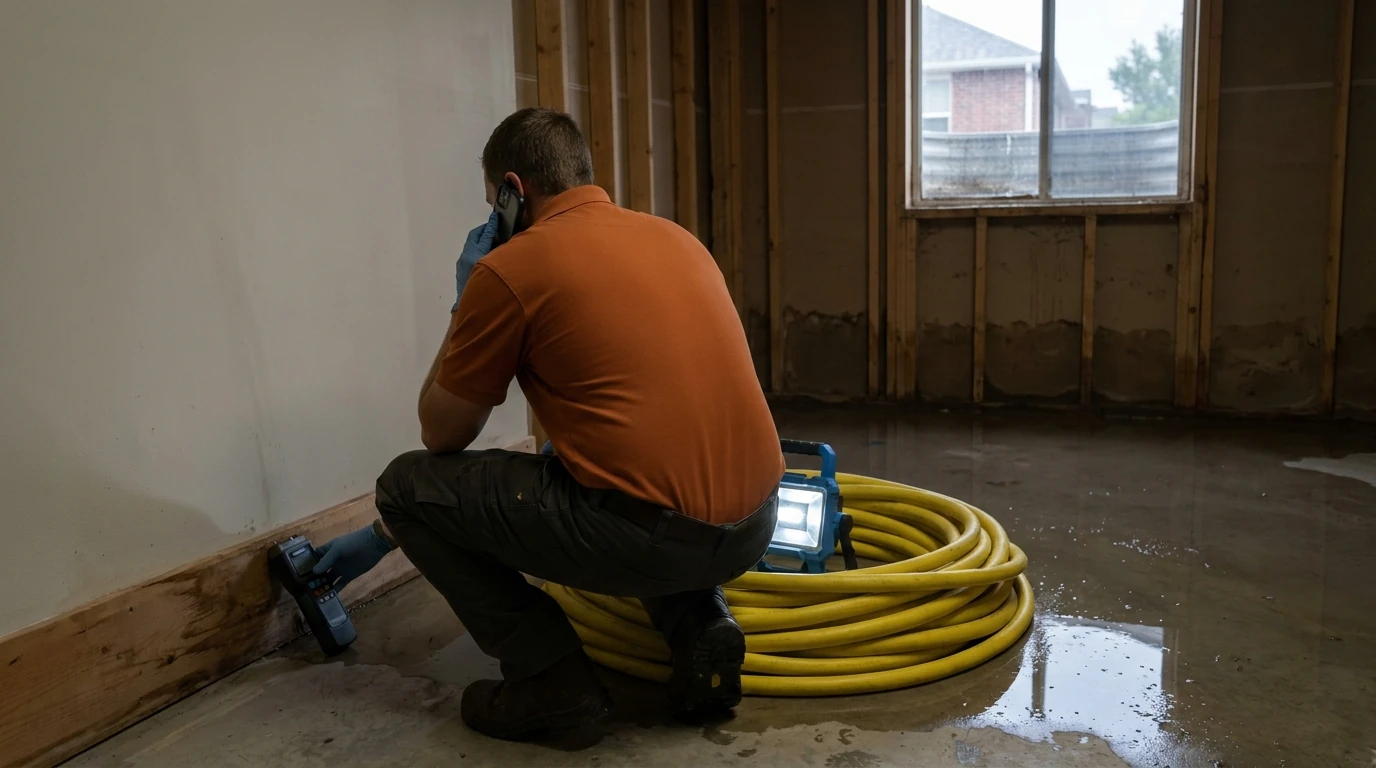
TL;DR: For water damage restoration in American Fork, UT, call FIX Restoration at (801) 930-9750, a licensed and insured crew that answers 24/7 and carries a 4.9-star rating across 558 Google reviews. If water is still actively running and you can’t reach the shutoff, call a plumber or your utility company first to stop the source. Once the water is off, a restoration crew handles extraction, drying, and the documentation your insurance adjuster will ask for.
If you just walked into a flooded basement in American Fork, or water is dripping through a ceiling in Lehi or Pleasant Grove, you don’t need a long list of options to sort through. You need one number that gets a truck moving, and someone on the phone who can tell you in the next sixty seconds whether you also need a plumber. Here’s how to make that call count, and what should happen in the hours after you place it.
Who do I call first when water is actively spreading through my home?
Call a water damage restoration company first if the water source is already stopped or is something you can shut off yourself, like a washing machine hose, a water heater, or a supply line under a sink. That call gets extraction equipment and dehumidifiers moving while there’s still time to save drywall, subfloor, and trim.
The type of water matters for how fast you move. Clean supply-line water (Cat 1) stays manageable for a few hours. Water that’s picked up contamination from a dishwasher or washing machine (Cat 2) should be treated faster. Sewage or flood water (Cat 3), also called black water, needs removal the same day, with the crew following the ANSI/S500 standard for how it’s handled and what gets removed versus dried in place.
American Fork’s lower benches, where a lot of finished basements sit close to the water table along American Fork Creek, tend to see slower-draining water sit longer against foundation walls. That’s one more reason to make the call as soon as you spot standing water rather than waiting to see if it dries on its own.
When should I call a plumber, electrician, or the utility company instead?
Call a plumber before a restoration crew if water is still flowing and you can’t find or reach the main shutoff valve. A restoration crew can start extraction around an active leak, but someone needs to stop the source, and a licensed plumber does that faster than most homeowners can manage under pressure.
Call an electrician or your utility company, not a restoration crew, if standing water is anywhere near outlets, a sub-panel, or a furnace with exposed wiring. Walking through water near live electrical components is a real shock hazard. If there’s any doubt, shut off power at the breaker from a dry spot, or wait for the utility company to confirm it’s safe.
If you’re dealing with a burst supply line specifically, our burst pipe checklist walks through the shutoff sequence step by step, including where most American Fork homes have their main valve.
What happens after the call, before the crew even arrives?
A dispatcher should ask for your address, the water source if known, and whether the water’s still running, then give you a realistic arrival window instead of a vague promise. While you wait, there are a few things worth doing if it’s safe.
Take photos or a short video of the standing water and anything it’s touched. Move furniture, electronics, and boxes off wet flooring if you can lift them without strain. Pull your homeowners insurance policy number and the claims phone number, since you’ll likely need both within the first day. Our first 24 hours after water damage guide covers this in more detail if you want the full sequence.
What does a restoration crew actually do once they’re on-site in American Fork?
A restoration crew’s first job on arrival is extraction and moisture mapping, not demolition. They pull standing water with truck-mounted or portable extractors, then use a moisture meter and sometimes a thermal camera to find water that’s already migrated into walls or under flooring where you can’t see it.
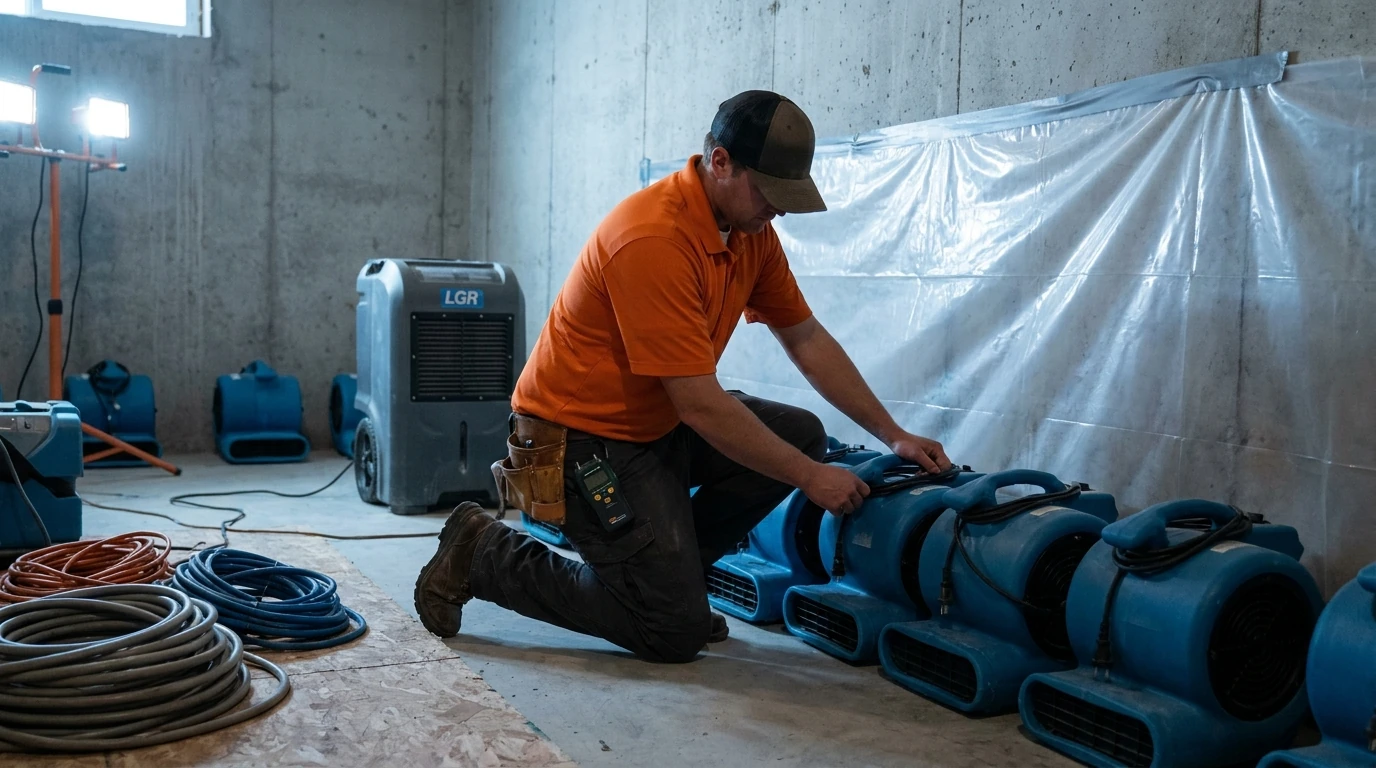
From there, they set air movers and low-grain-refrigerant dehumidifiers sized to the affected square footage, and they document moisture readings daily until materials dry to the S500 benchmark. That daily log is also what supports your insurance claim. The Insurance Information Institute notes that documented, dated evidence is one of the biggest factors in how smoothly a disaster claim settles, so a crew that photographs and logs as they go is doing you a favor beyond just the drying.
Once materials are dry, any affected drywall, flooring, or cabinetry that didn’t survive gets scoped for repair, which is a separate phase from the emergency mitigation work.
If you’re staring at water right now, don’t spend more time comparing options. Call FIX Restoration at (801) 930-9750 and let the first ten minutes on the phone sort out whether you need a plumber too.