
TL;DR: Water damage restoration in Utah typically costs $1,200 to $3,500 for a single room with clean water, $3,500 to $9,000 for a finished basement, and $8,000 to $18,000+ for a whole main floor with Category 2 or 3 water. Price depends on water category, square footage, how long the water sat, and whether drywall or subfloor needs to come out. Most homeowners policies cover sudden water losses after the deductible, but gradual leaks are usually excluded.
If your water heater let go in the basement overnight, or a supply line behind the dishwasher finally gave out, you’re probably staring at two or three estimates right now and wondering why they’re all so different. That’s normal. Water damage restoration isn’t priced like a flat-rate service call. It’s priced like a construction project, because for anything past a small spill, that’s what it is. Here’s how the numbers actually break down for a Utah County home, and what pushes a job from the low end of a range to the high end.
How much does water damage restoration cost in Utah?
Most water damage jobs in American Fork and the surrounding Wasatch Front fall between $3.75 and $9.00 per square foot once you include extraction, drying, and basic repairs. The spread is wide because “water damage” covers everything from a single wet bedroom carpet to a sewage backup that destroys a finished basement.
The table below reflects typical industry ranges for this region. These are starting points for budgeting, not a quote. Every loss gets a written scope before any work begins, because the condition of your specific subfloor, insulation, and finish materials moves the number more than any formula can predict.
| Scenario | Typical Cost Range |
|---|---|
| Single room, Category 1 (clean) water, under 200 sq ft | $1,200 to $3,500 |
| Finished basement, Category 2 water, 500 to 1,000 sq ft | $3,500 to $9,000 |
| Whole main floor, Category 2 water, 1,000+ sq ft | $8,000 to $15,000 |
| Category 3 (black water) loss, sewage or flood water, small area | $4,500 to $12,000 |
| Mold remediation add-on (water sat 48+ hours) | $1,500 to $6,000 |
| Structural reconstruction after drying (drywall, flooring, trim) | Varies by scope, often 30 to 50 percent of total project cost |
Notice that drying is usually the smaller line item. Reconstruction, replacing the drywall, baseboards, flooring, and sometimes cabinetry, is where a basement flood or a slow leak behind a vanity stops being a $2,000 job and becomes a $10,000 one.
What actually drives the price up or down?
The single biggest factor is water category, not square footage. Category 1 water (a clean supply line break) costs far less to remediate than Category 3 water (sewage backup or floodwater), because Category 3 requires more aggressive demolition, antimicrobial treatment, and disposal of anything porous it touched.
Response time matters almost as much. Water sitting for 24 to 48 hours soaks into subfloor and wall cavities in ways that are cheap to dry but get expensive to dry out once mold or wood rot sets in, often past the 72-hour mark described in the EPA’s mold guidance. A job called in the same day usually costs less than the identical loss reported a week later.
A few other things that move the number:
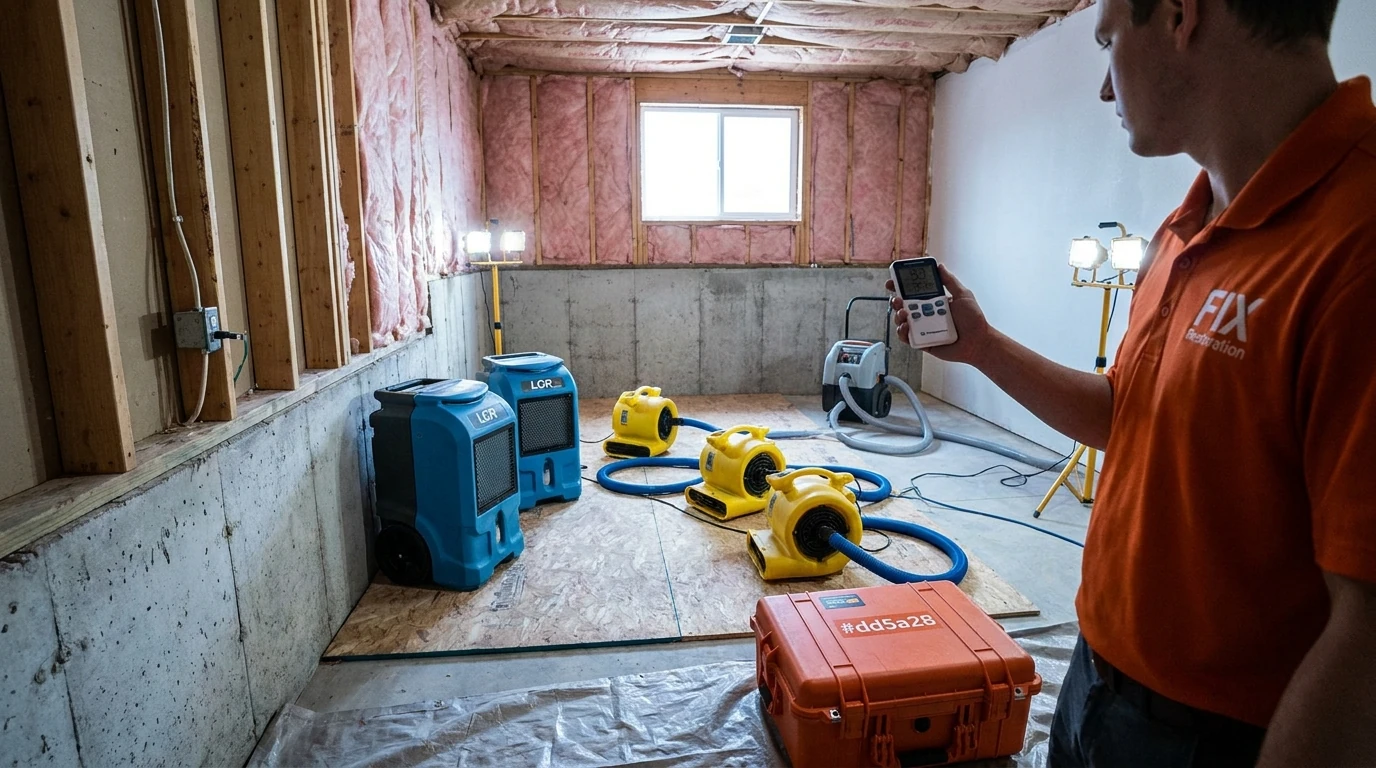
- Square footage and ceiling height. Air movers and dehumidifiers are priced per unit per day, so a tall great room with cathedral ceilings needs more equipment than a standard basement.
- What’s affected. Carpet and pad are inexpensive to replace. Hardwood, engineered flooring, and cabinetry that has to come out and get rebuilt cost considerably more.
- Where the water came from. A finished basement with drywall, insulation, and flooring costs more to restore than an unfinished one with exposed studs and a concrete slab, which is common in older American Fork homes near Main Street.
- Whether reconstruction is needed. Drying-only jobs are the cheapest tier. Jobs that need new drywall, paint, trim, and flooring after drying push into the reconstruction tier.
Will homeowners insurance cover the cost?
Most homeowners policies cover sudden, accidental water damage, like a burst pipe or a failed water heater, after your deductible, but they typically exclude gradual leaks and flooding from an external source like a rising creek. A standard policy in Utah usually has a deductible between $1,000 and $2,500, which means for a mid-size job, insurance often covers the majority of the restoration cost once that deductible is met.
The Utah Insurance Department is a good resource if you want to understand your specific policy language before you file. Our full breakdown of what homeowners insurance typically covers for water damage goes deeper on the clean-water-versus-gradual-leak distinction that determines whether a claim gets approved.
The documentation matters as much as the policy language. Photos of standing water before extraction, moisture readings showing the extent of the damage, and a detailed scope of work are what adjusters use to approve a claim without a fight. This is also where it pays to have the restoration company and the insurance conversation happen in the right order: mitigation starts first to prevent further damage, and the paperwork follows.
What does a water damage restoration job actually include?
A standard job runs through five phases, and understanding them helps explain why the invoice isn’t a single line item.
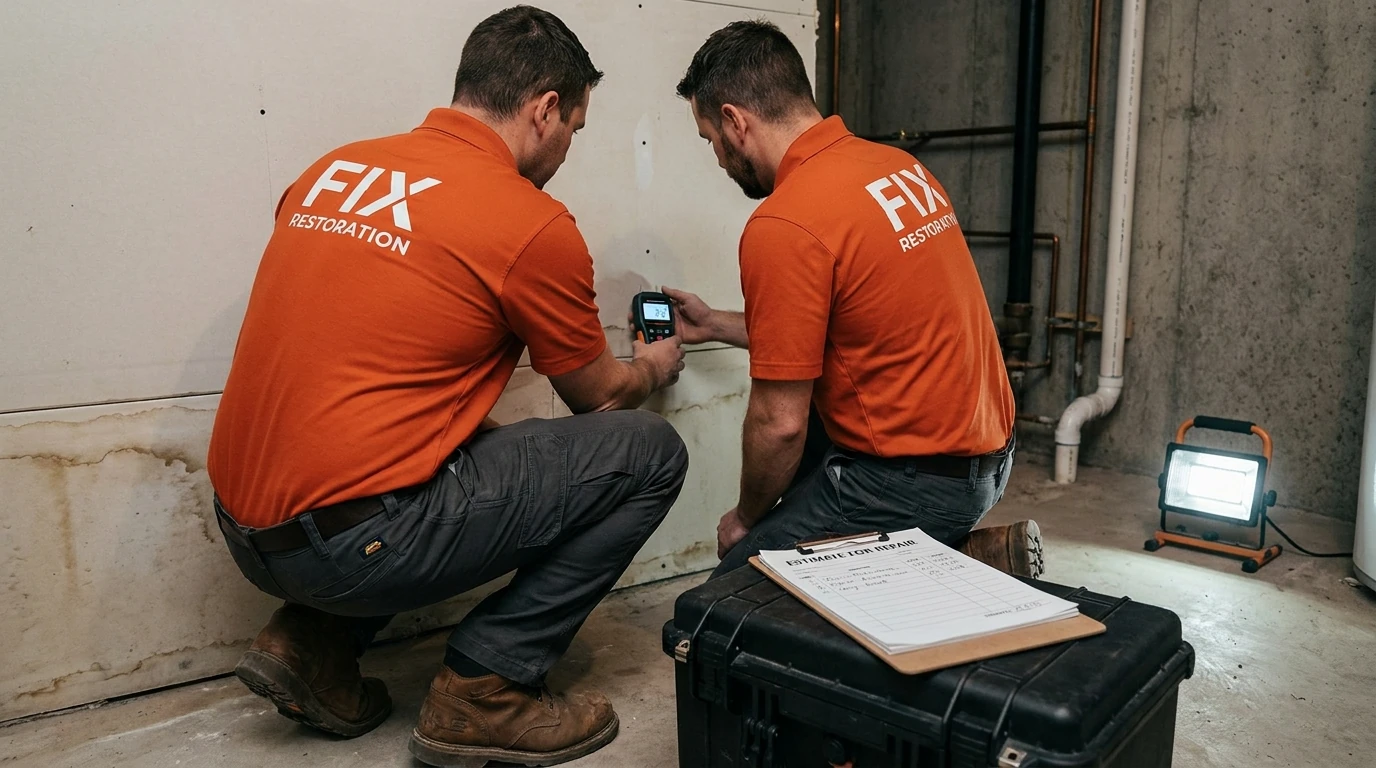
- Inspection and moisture mapping. A technician uses a moisture meter and sometimes a thermal camera to map exactly how far the water traveled, including behind walls and under flooring you can’t see.
- Water extraction. Standing water comes out first with truck-mounted or portable extraction equipment, usually within the first few hours of arrival.
- Controlled demolition. Drywall, insulation, or flooring that can’t be dried in place comes out now, typically the lower 12 to 24 inches of wall if the water line was contained.
- Structural drying. Air movers and dehumidifiers run for roughly 3 to 5 days, following the IICRC S500 standard for drying documentation, with daily moisture readings to confirm progress.
- Reconstruction. Once materials test dry, new drywall, paint, baseboards, and flooring go back in, either by the restoration company directly or coordinated through a general contractor.
That last step is where our general contracting and reconstruction work picks up for clients who want one company handling drying through final paint, rather than managing two separate contracts.
What should I do before getting a quote?
Get a written scope of work before agreeing to anything, not a verbal number over the phone. A real estimate should list the equipment count, drying timeline, and exactly what’s being demolished versus dried in place.
If water is actively flowing, shut off the source first (the main valve or the fixture’s supply line) before anything else. Our burst pipe checklist walks through the first hour step by step. Photograph the damage before anyone starts work, note the time water was first discovered, and hold onto any receipts for temporary fixes like a plumber’s emergency visit. Those details speed up both your estimate and your insurance claim.
For homes anywhere from American Fork down through Spanish Fork or up through Lehi, the pattern is the same: the sooner water gets measured and extracted, the smaller the final number. Request a water damage estimate if you want a written scope before deciding on next steps.
About FIX Restoration
FIX Restoration is a locally owned and operated restoration company based in American Fork, Utah, serving Utah County and the surrounding Wasatch Front since 2012. The company is licensed and insured, and its crews handle water damage restoration, water cleanup, sewage cleanup, mold remediation, fire and storm damage restoration, and general contracting and reconstruction throughout American Fork, Provo, Orem, Lehi, and nearby communities.