
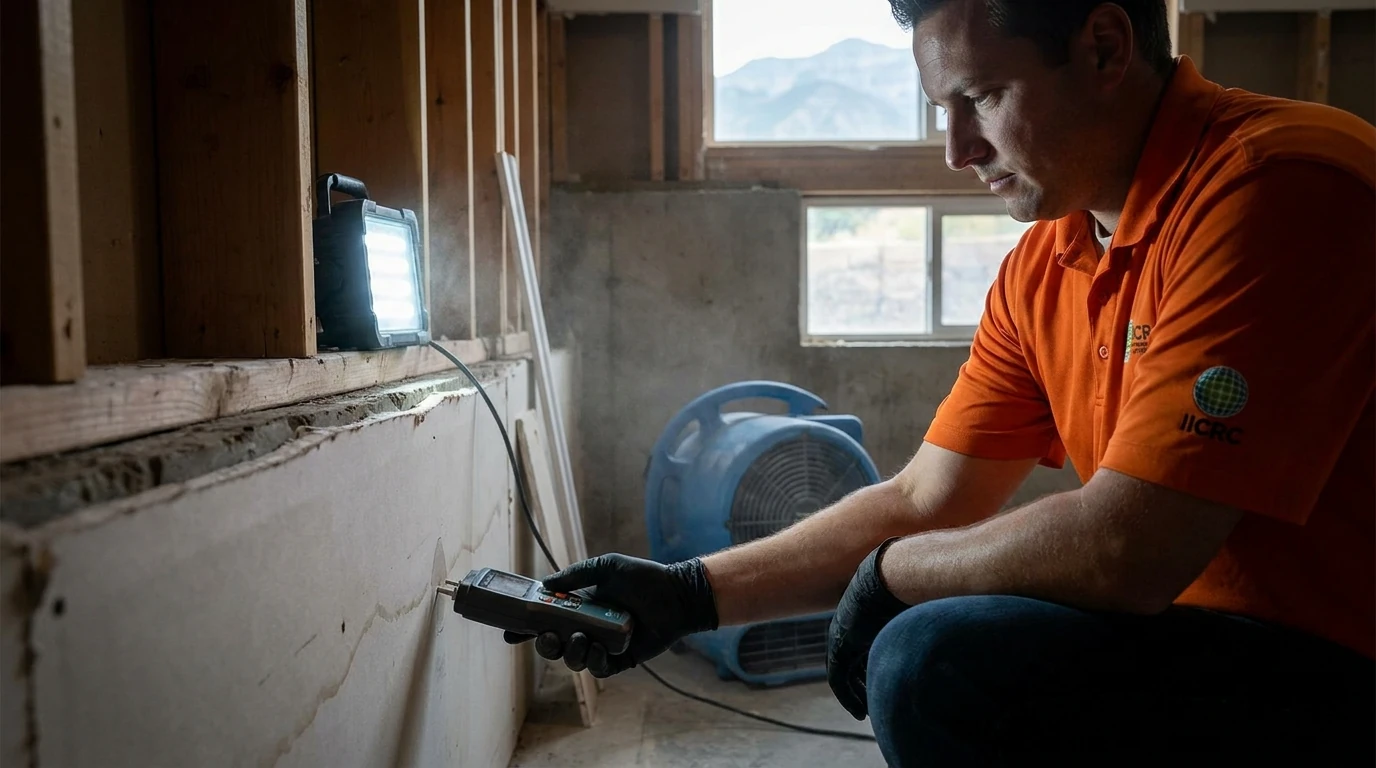
TL;DR: Water damage repair cost in American Fork depends on three variables: the category of water involved (clean, gray, or black), how many square feet were affected, and which materials need to be replaced versus dried in place. A small drywall patch after a quick cleanup costs far less than a full basement rebuild with new framing, insulation, flooring, and cabinetry. There is no flat rate because no two losses affect the same combination of materials.
If a pipe failed in your American Fork basement last week and the mitigation crew already hauled out the drying equipment, you are probably staring at cut drywall and bare framing and wondering what the repair phase will actually run. That’s a fair question, and it’s a different question than “what does restoration cost” (mitigation and drying) because repair is the rebuild: new drywall, baseboard, flooring, paint, sometimes cabinetry or trim carpentry. Homes along American Fork Creek and the older neighborhoods near Main Street tend to have finished basements that took on water during spring runoff or a failed sump pump, and those jobs run differently than a single upstairs bathroom leak.
What determines water damage repair cost in American Fork?
Three factors drive the final number: the category of water, the square footage affected, and the specific materials that need replacing instead of just drying. A clean-water leak caught within hours might only need a few feet of baseboard and a drywall patch. A slow leak that sat for days, or a sewage backup, usually means tearing out flooring, insulation, and lower drywall across a wider area.
Square footage matters because labor and materials scale with it. A 10-foot section of hallway drywall is a different job than an entire basement family room. Material type matters too. Drywall and standard baseboard are inexpensive to replace. Engineered hardwood, built-in cabinetry, and finished basement trim carpentry cost more and often take longer to source and install, especially if the original material is discontinued.
Response time plays a role as well. The IICRC S500 standard notes that water left untreated for more than 24 to 48 hours significantly increases the likelihood of secondary damage, including swelling, delamination, and mold growth behind walls. The longer water sits, the more material typically has to come out instead of just drying in place, which pushes repair scope up.
How does the category of water change repair pricing?
Category of water is the single biggest cost driver because it determines how much material can be saved versus how much must be removed and replaced. Category 1 (clean water, like a supply line break) often allows drying in place with minimal tear-out. Category 3 (black water, like sewage backup or floodwater) requires removing porous materials entirely, which is a repair, not a cleaning.
Category 1, clean water from a fresh pipe break or appliance supply line failure, is the least destructive. If it’s addressed within a day or two, baseboard and lower drywall can sometimes be saved, which keeps the repair scope small.
Category 2, gray water, includes water from a washing machine overflow or a dishwasher failure. It typically requires antimicrobial treatment and some material replacement, since gray water carries contaminants that clean water doesn’t.
Category 3, black water, covers sewage backups and floodwater. The EPA and most health departments treat this category as a full-removal situation: carpet, pad, drywall up to the flood line, and insulation all come out regardless of how quickly the water is extracted, because the contamination risk outweighs the cost of saving material.
Which repairs tend to cost more than others?
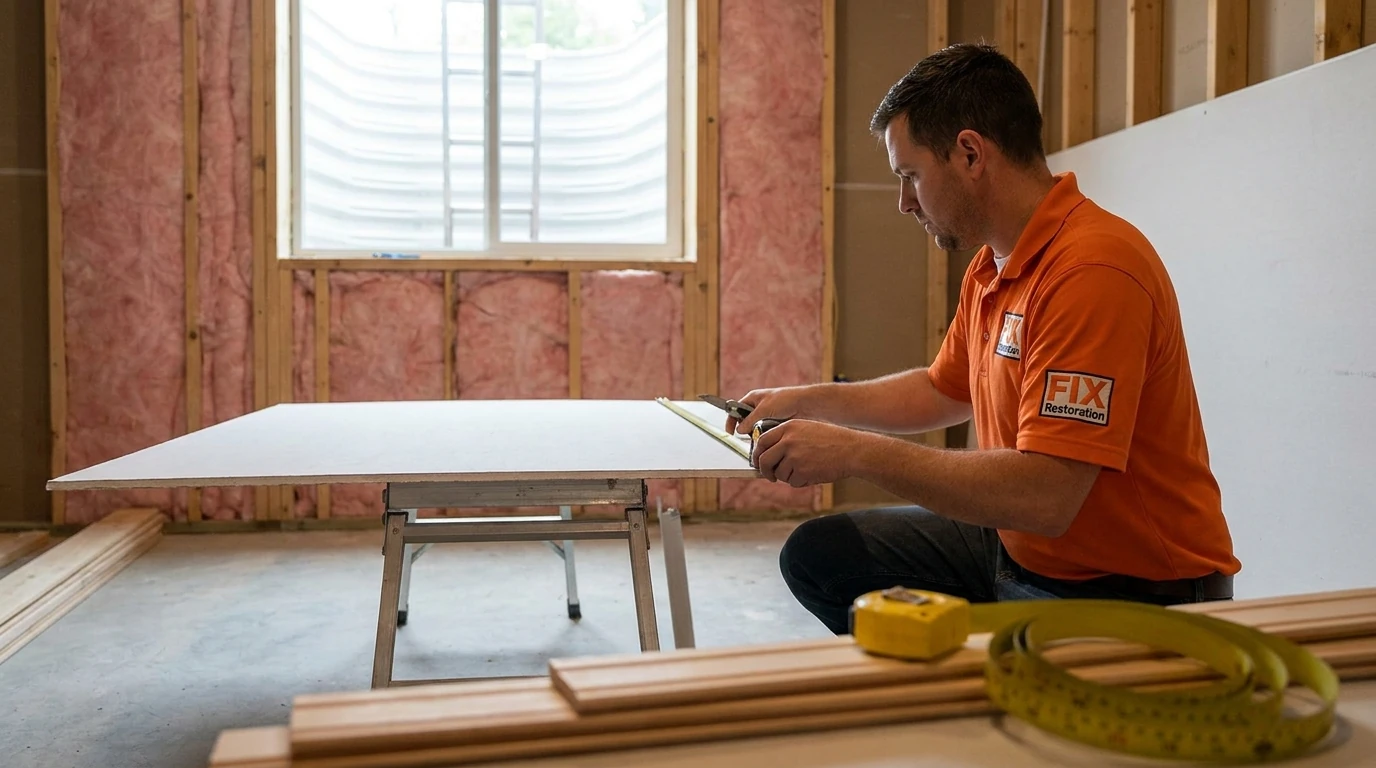
Flooring and finished basement rebuilds are consistently the most expensive line items, because they involve both material cost and skilled labor, not just drywall and paint. A few patterns show up repeatedly in repair scopes:
- Flooring replacement (hardwood, tile, or carpet with pad) usually costs more per square foot than drywall or paint, especially if matching an existing floor that’s no longer manufactured.
- Basement reconstruction after a sump pump failure or groundwater intrusion often involves framing, insulation, drywall, and flooring together, since basements in this area are frequently finished living space rather than unfinished storage.
- Cabinetry and built-ins damaged by a kitchen or laundry room leak take longer to source and install than standard drywall repair.
- Trim and baseboard carpentry adds labor time, particularly in older homes with custom profiles that don’t match big-box stock trim.
- Mold remediation add-ons become part of the repair scope if drying was delayed. For more on that timeline, see how soon mold grows after water damage.
Will homeowners insurance pay for the repairs?
Most homeowners policies cover sudden, accidental water damage, like a burst pipe or failed water heater, but they generally exclude damage from long-term leaks or lack of maintenance. Whether your repair costs are covered comes down to how the loss is documented, not just what caused it.
Adjusters look for proof that the damage was sudden and that mitigation started promptly. That means photos of the original damage, moisture readings showing the extent of the wet area, and an itemized scope of what’s being replaced and why. A repair estimate that lists “replace drywall” without documenting the category of water or the moisture readings behind it is a weaker claim than one with both.
For a fuller walkthrough of what’s typically covered and what isn’t, see does homeowners insurance cover water damage. If you’re still in the first hours after discovering damage, the first 24 hours checklist covers what to document before repairs start.
Who should you call for an accurate repair estimate?
The only way to get an accurate number is a written scope from someone who inspects the specific materials affected, not a phone estimate based on square footage alone. Repair cost depends on what’s actually behind the wall, which only shows up once moisture mapping and any necessary demolition are done.
A written scope should list the category of water, the square footage affected, which materials are being replaced versus dried, and a line-item cost for each. That document is also what you hand your insurance adjuster, so it needs to hold up to scrutiny.
Call FIX Restoration at (801) 930-9750 to schedule a moisture assessment and get a written repair scope for an American Fork property. For a look at what a completed job in this area typically involves, see the American Fork water damage restoration cost breakdown.
Repair cost in American Fork isn’t a single number you can look up, it’s the sum of what the water touched and how long it sat there. The fastest way to keep that number small is getting moisture readings and a written scope before any repair work starts, not after.
About FIX Restoration
FIX Restoration is a licensed and insured restoration company based in American Fork, UT, serving Utah County and the surrounding Wasatch Front since 2012. The company handles water damage restoration, emergency water removal, mold remediation, fire damage restoration, sewage cleanup, storm damage restoration, and general contracting and reconstruction across American Fork, Lehi, Orem, Provo, and nearby communities.